
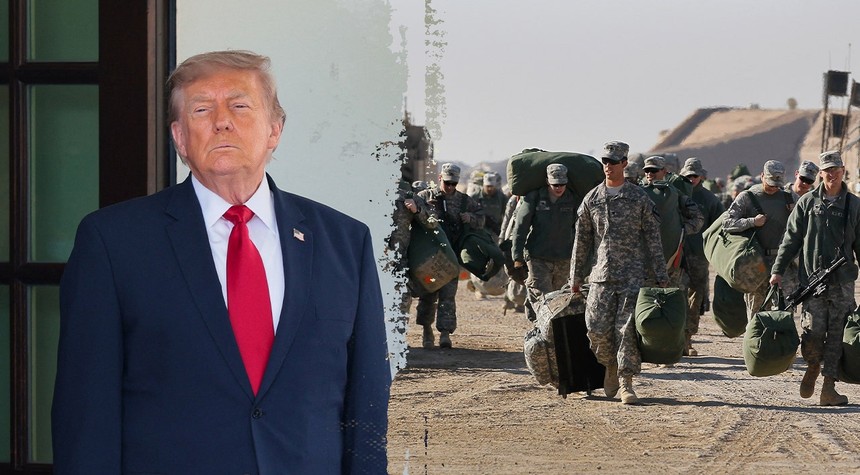
President Donald Trump announced Tuesday that the United States will conclude its military presence in Iraq, stating that the weakening of Iranian influence has positioned Baghdad to maintain security independently as the coalition mission approaches its scheduled September 30 termination date.
The announcement represents a significant shift in American foreign policy in the Middle East, where U.S. forces have maintained a continuous presence for more than two decades. The President’s assessment that Iraq can now stand without American military support marks what administration officials describe as a successful conclusion to the counter-terrorism mission that brought American forces back to the country in 2014.
Iraqi Prime Minister Ali al-Zaidi, speaking alongside President Trump, reinforced this position with a firm declaration that armed factions operating outside government authority will find “no justification” for their continued existence once the coalition mission ends. The Prime Minister’s statement appeared directed at the various militia groups that have operated with varying degrees of independence from Baghdad’s central government, some with ties to neighboring Iran.
Al-Zaidi emphasized that restricting weapons and military authority to state-controlled forces represents “a decision, not an option,” signaling what could prove to be a decisive moment in Iraq’s efforts to assert sovereignty over all armed groups within its borders. The Prime Minister expressed confidence that Iraqi security forces possess the capability to protect the nation without foreign military assistance.
The transition will not mark an end to American engagement in Iraq, but rather a fundamental change in the nature of that relationship. President Trump outlined a vision for continued partnership focused on economic investment and energy sector development rather than military cooperation. This shift reflects the administration’s broader strategy of reducing overseas military commitments while maintaining economic and diplomatic ties.
Prime Minister al-Zaidi confirmed this economic focus, stating that while U.S. forces will depart Iraq by September 30, American companies will maintain and expand their presence in the country. This distinction between military withdrawal and economic engagement suggests both nations view commercial partnership as the foundation for their future relationship.
The announcement comes amid ongoing concerns about Iranian influence in Iraq, where Tehran has cultivated relationships with various political factions and militia groups over the years. The Trump administration has consistently identified Iranian proxy forces as a destabilizing presence in Iraq and across the broader Middle East region.
Whether Iraq’s security forces can effectively counter both external threats and internal challenges from independent militia groups remains an open question. The country has faced persistent security concerns, including remnants of terrorist organizations and armed factions with divided loyalties.
The September 30 deadline now stands as a firm marker for this transition. The success or failure of Iraq’s ability to maintain stability independently will have significant implications not only for the Iraqi people but for American foreign policy throughout the Middle East. The coming months will demonstrate whether this confidence in Iraq’s readiness proves well-founded.
