
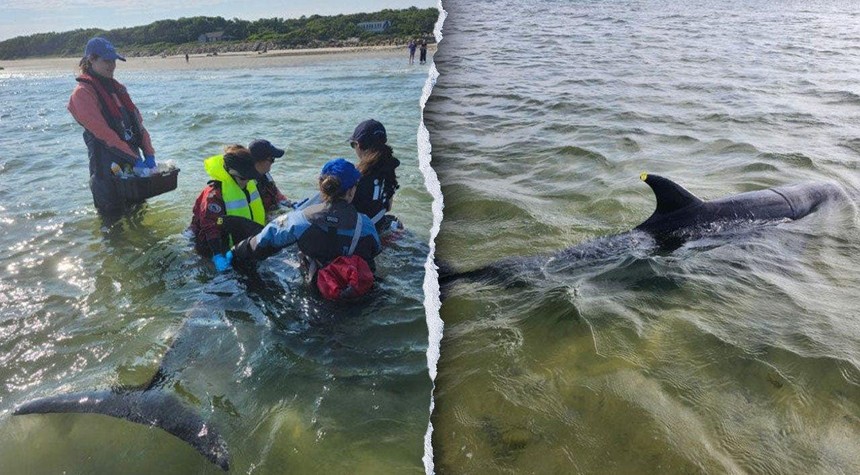
Marine rescue operations entered their second consecutive day this week as teams worked to save nearly 50 bottlenose dolphins stranded along the Massachusetts coastline in what officials are calling the largest known stranding of this marine mammal in the state’s history.
The International Fund for Animal Welfare reported that the crisis began early Monday morning when initial reports indicated that between 28 and 30 bottlenose dolphins had become stranded at First Encounter Beach in Eastham, Massachusetts. The calls came in around 5:30 a.m., prompting an immediate response from marine rescue specialists.
By the time rescue teams arrived on scene, five to six animals had already perished. The remaining dolphins managed to refloat themselves with the incoming tide, though their ordeal was far from over.
The situation evolved rapidly on Tuesday when rescue teams discovered four additional stranded bottlenose dolphins. That number quickly escalated to 19 animals spread across three separate locations along a nine-mile stretch of the Cape Cod coastline, presenting rescue crews with a complex logistical challenge.
Brian Sharp, program director for Marine Mammal Rescue at the International Fund for Animal Welfare, provided an assessment of the animals’ condition. “These animals are in decent condition,” Sharp stated. “Two have been fitted with satellite tags so we can now monitor their movements and even see if the separated groups come back together.”
Sharp confirmed that all 19 animals had successfully refloated as the tide rose Tuesday afternoon. However, rescue teams remained on site to monitor the situation closely. “We’ll continue to monitor and coax them out of Wellfleet Bay to give them the best chance at survival,” Sharp explained. “The next low tide will be around 6 p.m. this evening.”
The incident has drawn attention to a concerning pattern that marine biologists have observed in recent years. Bottlenose dolphins are typically an offshore species, rarely venturing into shallow coastal waters. Yet the International Fund for Animal Welfare has documented an increasing trend of these animals appearing closer to Cape Cod’s shores, raising questions about changing environmental conditions or shifts in the dolphins’ behavioral patterns.
The rescue effort in Massachusetts comes on the heels of another dramatic marine mammal rescue operation off Australia’s Gold Coast, where marine rescue teams battled wind and waves for nearly four hours to free a 26-foot humpback whale that had become entangled in shark-control nets.
As rescue operations continue along the Massachusetts coast, marine mammal specialists remain vigilant, knowing that the evening’s low tide could present additional challenges for any dolphins that have not yet made their way to deeper, safer waters.
Related: Family of Texas Teen Who Drowned Demands Full Investigation After Evidence Tampering Charges
