
PHILADELPHIA — As baseball fans gathered at Citizens Bank Park for the All-Star festivities, a significant dispute between team owners and players has emerged that could reshape America’s pastime.
Major League Baseball remains the only major American professional sport without a salary cap. Now, league owners have mounted a coordinated campaign to change that fundamental aspect of the game’s economic structure.
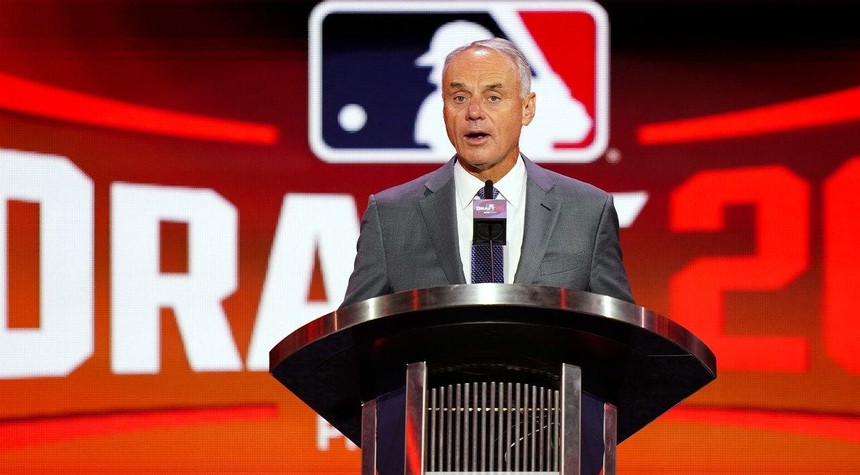
The push has intensified in recent months, with owners pointing to the Los Angeles Dodgers’ substantial payroll expenditures as evidence that reform is necessary. League officials, under Commissioner Rob Manfred’s direction, have utilized social media platforms to advance their position, posting graphics suggesting the current system has created an unsustainable competitive imbalance.
The league’s messaging has been direct and, some would argue, alarming. Officials have told fans that professional baseball in its current form is broken and requires intervention. Without payroll limitations, they contend, smaller market teams face insurmountable obstacles in pursuing championship titles.
This represents a remarkable public relations strategy. The league is essentially telling paying customers that the product they support is fundamentally flawed and needs restructuring through ownership-imposed spending restrictions.
The timing of this campaign is notable. The current season has actually demonstrated considerable competitive balance across the league. Teams from various market sizes have remained in contention, undermining the narrative that only high-spending franchises can compete for championships.
Players have responded skeptically to the owners’ characterization of baseball as a broken enterprise. During media availability sessions at the All-Star Game, several of the sport’s premier athletes made clear their opposition to salary cap implementation.
The disagreement touches on fundamental questions about baseball’s economic model. Unlike the National Football League, National Basketball Association, and National Hockey League, baseball has historically operated with luxury tax penalties rather than hard spending limits. This system allows wealthy teams to exceed certain thresholds while paying financial penalties, but does not absolutely prevent them from signing players.
Owners argue this creates an uneven playing field. Players counter that ownership groups in smaller markets often choose not to invest in competitive rosters, regardless of their financial capacity to do so.
The debate will likely intensify as the current collective bargaining agreement’s expiration approaches. Previous negotiations between owners and the players’ union have occasionally resulted in work stoppages, most recently in 2022.
For now, fans attending the All-Star festivities in Philadelphia can enjoy the spectacle of baseball’s best talent gathered in one place. But the sport’s economic future remains uncertain, with fundamental disagreements about competitive structure still unresolved.
The question facing baseball is whether the current system truly prevents smaller market teams from competing, or whether ownership commitment to winning varies regardless of market size. The answer may determine the sport’s structure for decades to come.
As the All-Star Game proceeds, these larger questions loom over a celebration meant to showcase baseball at its finest.
Related: House Passes Bill to Make Daylight Saving Time Permanent Nationwide
