
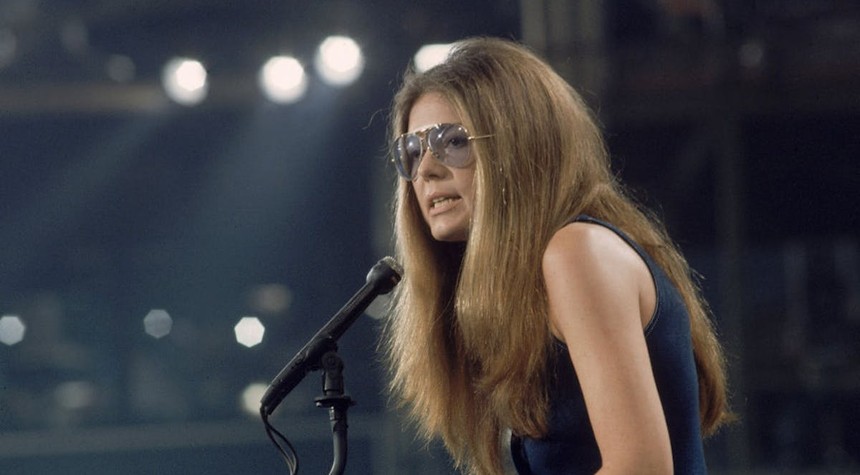
Gloria Steinem, the prominent feminist activist whose influence on American social life spanned more than five decades, died Wednesday at age 92. Her passing marks the end of an era for the women’s liberation movement she helped define, though the consequences of her advocacy continue to reverberate through American society.
Born in Toledo, Ohio, Steinem rose from freelance journalism to become the most recognizable face of second-wave feminism. Her influence on American culture, particularly regarding marriage and family structure, represents one of the most significant social transformations of the late 20th century.
Steinem’s views on traditional family structure were unambiguous. Speaking at the Feminist Family Values Forum in 1996, she challenged fundamental assumptions about American household organization. She argued that the nuclear family model, which many Americans considered the bedrock of society, was merely a recent industrial construct designed to serve capitalist interests. Her rejection of what she termed the “singular” concept of family sought to redefine these institutions that had anchored American life for generations.
Her career gained momentum in 1963 with an undercover investigation of working conditions at New York’s Playboy Club, where she posed as a “Playboy Bunny.” This exposé established her journalistic credentials and provided a launching pad for her activism.
By 1971, Steinem had aligned herself with prominent left-wing figures Bella Abzug and Shirley Chisholm to establish the National Women’s Political Caucus. The following year brought the founding of Ms. magazine, which became the primary publication advancing the women’s liberation agenda to mainstream America.
Steinem’s approach to political opposition revealed the limits of her professed tolerance for differing viewpoints. While she acknowledged the right of conservative women to hold contrary opinions, her public treatment of them often contradicted this stated principle. Her characterization of Texas Republican Senator Kay Bailey Hutchison as a “female impersonator” during the 1993 Senate race demonstrated her dismissive attitude toward women who rejected her ideological framework.
Throughout the Reagan administration, Steinem opposed the president’s economic policies. She refused to accept George W. Bush as the legitimate president following the 2000 election, and later participated in demonstrations against President Donald Trump, declaring he did not represent her values.
In what many observers noted as ironic, given her decades of activism suggesting women did not require marriage, Steinem married David Bale in 2000 at age 66. The union made actor Christian Bale her stepson.
Her later years brought establishment recognition, culminating in the Presidential Medal of Freedom awarded by President Barack Obama in 2013.
Steinem’s legacy remains deeply contested. Her supporters credit her with expanding opportunities for women in professional and public life. Her critics argue that her sustained campaign against traditional family structures contributed to the erosion of stable households, which data consistently shows provide optimal outcomes for children and social stability.
The full measure of Gloria Steinem’s impact on American society will likely be debated for generations. What remains undeniable is that her influence fundamentally altered the conversation about women’s roles, family structure, and American values. Whether that transformation strengthened or weakened the social fabric depends largely on one’s perspective regarding the institutions she spent her lifetime challenging.
Related: Buy Now Pay Later Loans Shift From Luxury Items to Basic Necessities
