
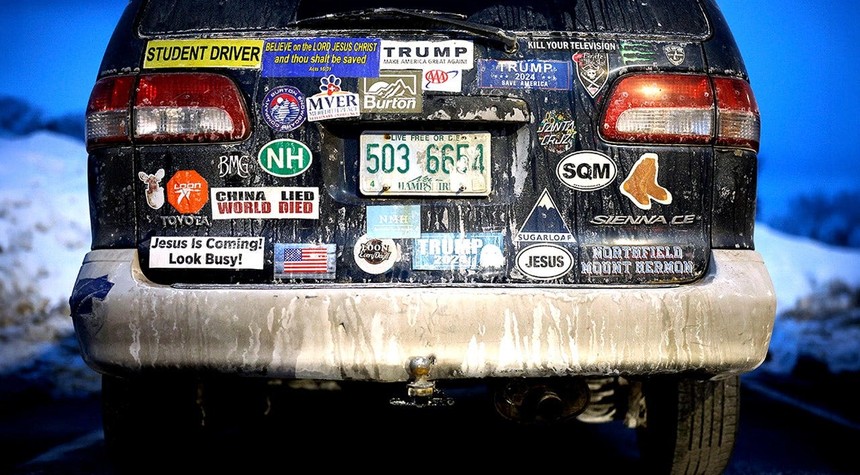
A North Carolina congressman has introduced legislation that would impose significant restrictions on automated license plate readers, addressing mounting concerns that these surveillance systems have expanded beyond their original crime-fighting purpose into potentially unconstitutional territory.
Representative Pat Harrigan introduced a bill Thursday that would fundamentally alter how law enforcement agencies can deploy and utilize automated license plate reader systems, including the widely-used Flock cameras that have sparked national debate over privacy rights.
The proposed legislation contains several key provisions. It would require law enforcement to obtain warrants for most searches of license plate data. It would mandate that collected records be deleted within 24 hours. It would prohibit vendors from selling or sharing location data with third parties. Perhaps most significantly, it would ban searches targeting vehicles based on political or religious messages displayed on them.
“When you consider that these systems track everything that you do, where you work, where your kids go to school, where you even go to church, I think it’s pretty easy to understand why people are concerned,” Harrigan said. “So, that’s an extraordinary amount of information about somebody that the government has that has never committed a crime.”
The technology at issue operates by photographing license plates and recording location data, creating searchable databases that allow officers to track vehicle movements and identify cars matching suspect descriptions. Law enforcement agencies have embraced these systems as valuable investigative tools, particularly in solving serious crimes.
The debate has divided Americans along familiar lines. Supporters argue the cameras serve legitimate public safety functions and help solve crimes that might otherwise go unpunished. Critics contend they represent government overreach, collecting vast amounts of data on law-abiding citizens without consent or probable cause.
The issue has attracted attention from the highest levels of government. President Donald Trump expressed qualified support for Flock cameras in September, acknowledging their value to law enforcement while recognizing that some Americans view them as an infringement on privacy rights.
Harrigan’s bill would specifically prohibit government agencies from categorizing vehicles by what the legislation terms “expressive attributes.” This means bumper stickers, flags, or decals conveying political or religious messages could not be turned into searchable data points. Whether a vehicle displays “Back the Blue,” “Jesus Saves,” or “Black Lives Matter” would be off-limits for database searches.
“At the end of the day, they have nothing to do with whether you committed a crime or not,” Harrigan explained. “As all of this data comes in and is vacuumed in by the government, it becomes searchable, particularly with the new technologies that we have surrounding artificial intelligence.”
This concern about artificial intelligence capabilities represents a newer dimension to the debate. As machine learning and pattern recognition technology advances, the potential uses of accumulated license plate data extend far beyond simple location tracking.
The legislation arrives as communities across the nation grapple with how to balance public safety against constitutional protections. Several Texas cities have already discontinued their use of Flock cameras in response to privacy concerns and questions about data security.
The bill faces an uncertain path forward in Congress, where members must weigh competing interests of effective law enforcement against Fourth Amendment protections against unreasonable searches and seizures.
Related: Measles Cases Surpass 4,400 Nationwide as Federal Health Officials Deploy to Pennsylvania
