
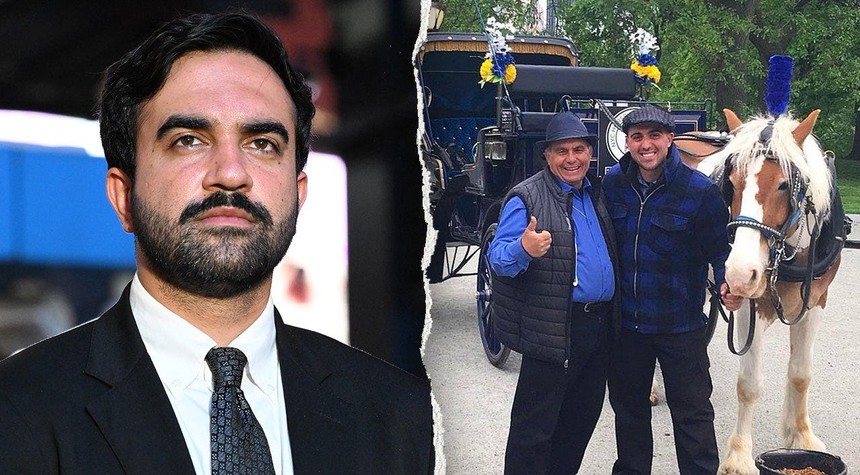
A decision of considerable consequence faces the New York City Council next week, one that will determine the fate of an industry that has operated in Manhattan for 168 years. The horse-drawn carriages that have lined Central Park’s perimeter since before the Civil War may soon become merely a memory.
Mayor Zohran Mamdani and City Council Speaker Julie Menin announced this week that they have reached an agreement to phase out the horse carriage industry entirely by June 2028. The council is expected to vote on the measure in the coming days. The legislation carries the name “Romanch’s Law,” in honor of 18-year-old Romanch Mahajan, who died following a fall from a carriage this past June.
The debate surrounding these carriages has intensified in recent years. Animal rights activists have voiced concerns about horse welfare, citing instances of horses collapsing and, on occasion, escaping into city traffic. Videos of such incidents have circulated widely, lending momentum to calls for the industry’s termination. Activists have accused carriage operators of inadequate care, though these allegations remain contested.
Frank Riccobono, who owns and manages NYC Horse Carriage Rides, maintains 12 horses and three carriages. He questions the logic behind targeting his industry while other street operations continue unimpeded.
“You have pedicabs flying around, so why are they permitted to have a business?” Riccobono asked. “And now a 168-year-old tradition, attraction is being forced to surrender, which is very taboo. I want my investment to stay there for the next 20 years, 50 years, 100.”
The economics of this decision extend beyond sentiment. Carriage operators have invested substantial capital in their businesses, purchasing horses, carriages, and maintaining the infrastructure necessary to operate in one of the world’s most expensive cities. These operators now face the prospect of losing their livelihoods, with no clear path forward.
Riccobono described the relationship between horse owners and their animals as deeply personal. “I had horses give birth in front of me,” he said. “I’ve owned their mom and I have their baby and it’s like taking a child away from me.”
The proposed legislation would not require owners to surrender their horses. They may keep, sell, or transfer the animals, provided they are not sent to slaughter, another carriage operation, or used for what the bill terms “inhumane purposes.” However, the practical effect is clear: these horses can no longer be used for their current purpose in New York City.
Riccobono challenged the characterization of his operation as cruel, calling it “brainwashing.” He insisted his horses receive regular veterinary care and what he described as “the most perfect lifestyle.” The criticism, he argued, stems from a fundamental misunderstanding of animal husbandry.
“That’s what this bill shows,” he said. “It shows they’re trying to criminalize us because a horse is working.”
Christina Hansen, a veteran carriage driver and shop steward for TWU Local 100, has also voiced concerns about the legislation’s impact on workers in the industry.
The question before the City Council represents more than a policy decision about animal welfare or public safety. It involves the fate of an industry, the livelihoods of those who depend upon it, and the preservation of a tradition that has survived world wars, economic depressions, and dramatic changes in how Americans live and work.
Whether that tradition deserves to survive into a third century remains, for now, an open question. The answer will come next week.
Related: Two Dead, Ten Injured After Vehicle Strikes Youth Soccer Game in Wichita
