
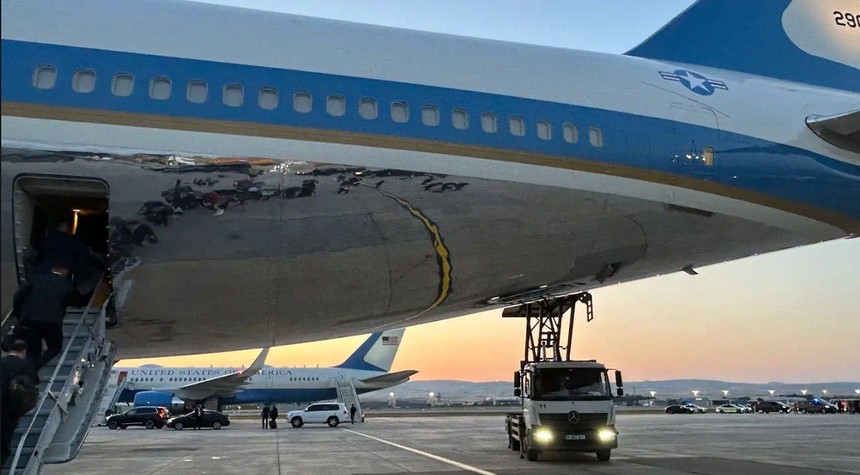
President Donald Trump secretly transferred from his official aircraft to a military jet during last month’s NATO summit in Turkey, a security maneuver prompted by what officials assessed as a credible threat from Iran.
The extraordinary security measure has raised questions about the safety protocols employed for those who remained aboard the original aircraft, which served as a decoy while the president traveled separately.
According to reports, Trump appeared to board the standard presidential aircraft in Turkey but instead transferred to a military jet for a portion of his journey. White House staff, Secret Service agents, military personnel, and members of the press corps traveling with the presidential delegation remained aboard the decoy plane, which then flew to the United Kingdom. The president later rejoined the group before the return flight to the United States.
The incident underscores the complex calculations that security officials must make when protecting the president during international travel. Air Force One is the radio call sign designated for any aircraft carrying the sitting president, not a specific plane, though the term has become synonymous with the modified Boeing 747s that typically transport the commander in chief.
What remains unclear is whether security officials conducted a separate threat assessment for those who remained on the decoy aircraft. Secretary of State Marco Rubio may have been among those aboard the original plane, though this has not been confirmed. The White House has not responded to inquiries regarding what protective measures, if any, were implemented for the staff, agents, military members, and journalists who continued on the decoy flight.
The decision to employ a decoy aircraft represents a significant security protocol typically reserved for situations where intelligence agencies have identified specific, credible threats to the president’s safety. The Iranian threat appears to have been deemed serious enough to warrant this unusual measure during the NATO summit held at the Bestepe Presidential Compound in Ankara on July 8.
Trump met with NATO Secretary General Mark Rutte during the summit for bilateral discussions on alliance matters. The security arrangements for the trip were apparently adjusted in response to intelligence received either before or during the president’s time in Turkey.
The use of decoy aircraft and alternative transportation methods has historical precedent in presidential security, though such measures are rarely disclosed publicly and typically only come to light well after the fact. The revelation of this particular security maneuver while the threat assessment presumably remains active is itself noteworthy.
The incident highlights the ongoing security concerns surrounding American officials traveling in regions where adversarial nations maintain significant influence or operational capability. Iran has previously made threats against American officials and has demonstrated both the intent and capability to conduct operations beyond its borders.
As of this report, the White House has provided no additional details regarding the nature of the Iranian threat, the duration of the security concerns, or the protocols followed for protecting those who remained aboard the decoy aircraft.
Related: ICE Plans Multimillion Dollar Purchase of Electric Shock Gloves for Immigration Enforcement
