
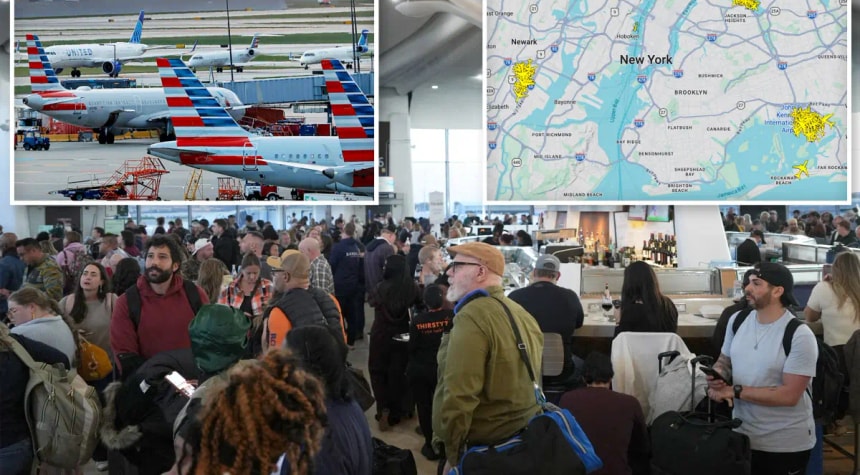
The Federal Aviation Administration ordered an extraordinarily rare nationwide ground stop Friday afternoon, citing what officials described as "extraordinary circumstances and for reasons of safety." The directive, issued at approximately 4 p.m. Eastern Standard Time, brought commercial aviation across the United States to a standstill for the third time in the nation’s history.
Transportation Secretary Sean Duffy attributed the disruption to a communication issue affecting all Air Route Traffic Control Centers throughout the country. These regional hubs are responsible for managing high-altitude flight operations across the nation’s airspace. The agency stated that inbound international flights would be evaluated and managed individually during the stoppage.
According to agency technicians investigating the matter, the outage may be connected to a recent software upgrade. Just three days prior to Friday’s incident, the FAA had announced the deployment of a new artificial intelligence tool called SMART across all twenty-two Air Route Traffic Control Centers. The system was designed to assist with flight planning operations.
When questioned about whether the artificial intelligence system played a role in the outage, Homeland Security Secretary Markwayne Mullin told reporters the administration was not ruling out any possibilities at this stage of the investigation. He declined to provide an estimate for when normal operations might resume but emphasized that the immediate priority remained ensuring the safe landing of aircraft currently in flight.
The gravity of such a nationwide directive cannot be overstated. Ground stops of this magnitude have been implemented only twice before in American aviation history. The first occurred in the aftermath of the September 11, 2001 terrorist attacks, when flights remained grounded for two days before resuming under significantly enhanced security protocols. The second took place in January 2023, when a failure in the Notice to Airmen system, which provides critical information to pilots and airports, officially halted flights for approximately ninety minutes.
That 2023 incident resulted in thousands of canceled and delayed flights, with ripple effects continuing for hours after systems were restored. The consequences of such disruptions extend far beyond immediate inconvenience, affecting commerce, personal travel, and the intricate logistics of modern air transportation.
Friday’s ground stop occurred against the backdrop of a recent massive Microsoft outage that disrupted services for millions of users worldwide. However, Secretary Mullin firmly dismissed any connection between the two events, stating officials saw no reason to link them.
Flight tracking data indicated that some international flights continued departing during the outage, though the full scope of the disruption remained under assessment as officials worked to restore normal operations.
The incident raises significant questions about the integration of new technology into critical infrastructure systems and the vulnerabilities that may accompany even well-intentioned modernization efforts. As the investigation continues, federal officials have pledged to provide updates as information becomes available.
The American aviation system, which facilitates thousands of flights daily and serves as a vital artery of national commerce, now faces scrutiny over the reliability of its most fundamental systems.
Related: California High School Faces Lawsuit Over Treatment of Muslim Student
