
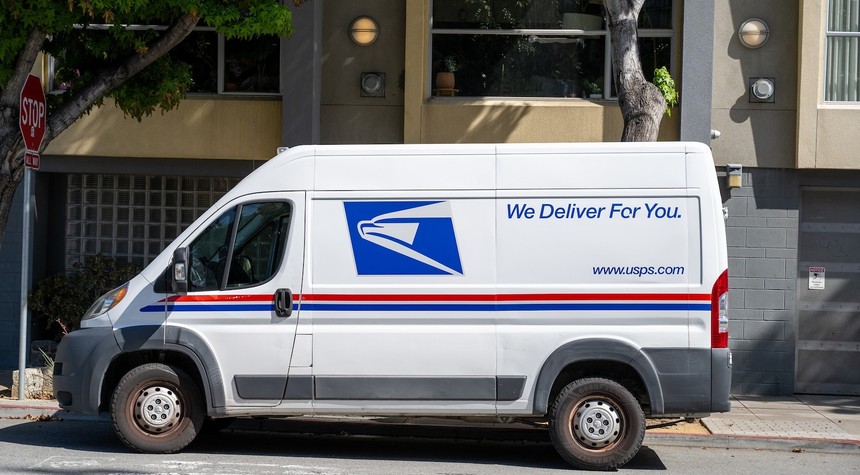
Postmaster General David Steiner informed the Senate Homeland Security and Governmental Affairs Committee on Wednesday that under a newly proposed regulation, the United States Postal Service would refuse to deliver mail-in ballots to states that decline to provide the federal government with lists of approved voters.
The proposal represents a significant expansion of federal authority over state-administered elections and has already drawn sharp criticism from Democratic lawmakers who characterize it as an unconstitutional overreach.
During testimony before the committee, Steiner confirmed that states refusing to comply with the manifest requirement would see their ballot delivery services suspended. When pressed by Senator Gary Peters of Michigan on whether the Postal Service would still mail ballots if a state refused to turn over its absentee voter list, Steiner responded directly: “Under our proposed regulation, no. We would tell the state that we need the manifest.”
The proposed rule would require states to provide the Postal Service with names, addresses, and ballot barcode numbers for every individual receiving a mail-in ballot. While this information represents less data than what appears on complete voter rolls, which often contain voter registration details and other sensitive information, it nonetheless marks an unprecedented federal intrusion into election administration, a responsibility traditionally reserved to the states.
Steiner, an attorney who previously served as chief executive of Waste Management before assuming his current post, defended the policy as routine administrative procedure. He characterized the requirement as an effort to ensure ballots are delivered “securely, efficiently, and accurately.” The Postmaster General further argued that the manifest system would help states verify that ballots reach their intended recipients.
“It really is trying to help the state make sure that the ballots that they send to the voters actually get there and get to those voters, and so it is strictly a manifest for us to make sure that the right ballots are going to the right people,” Steiner said.
The proposal aligns with an executive order signed by President Trump in March aimed at increasing federal oversight of elections. That executive order has already drawn legal challenges, with at least five lawsuits filed against it. Several of those cases have stalled, however, because the policy has not yet been implemented.
Democratic senators expressed strong opposition during the hearing. Senator Peters argued that the administration cannot simply impose its will on state election systems without proper legal authority. “Just because President Trump wants to do this does not make it law, does not make it right, does not make it constitutional,” Peters said. “There is certainly a massive difference between general mail requirements and regulating elections.”
Senator Elissa Slotkin of Michigan placed the proposal within what she described as a broader pattern of federal election interference. “The United States Postal Service is now part of this bigger story of this president desperate to federalize our elections,” Slotkin said. “He has tried every which way to say that if he and his party do not win in these November elections, they were rigged.”
The comment period for the proposed regulation remains open for one additional week, after which the Postal Service will review public feedback before determining whether to implement the policy.
The constitutional questions raised by this proposal are substantial. The administration of elections has historically been a state function, with federal involvement limited to ensuring compliance with constitutional protections and federal voting rights laws. This proposed rule would insert the federal government directly into the mechanics of ballot delivery, a significant departure from established practice.
Related: Great American State Fair Opens on National Mall to Mark Nation’s 250th Anniversary
