
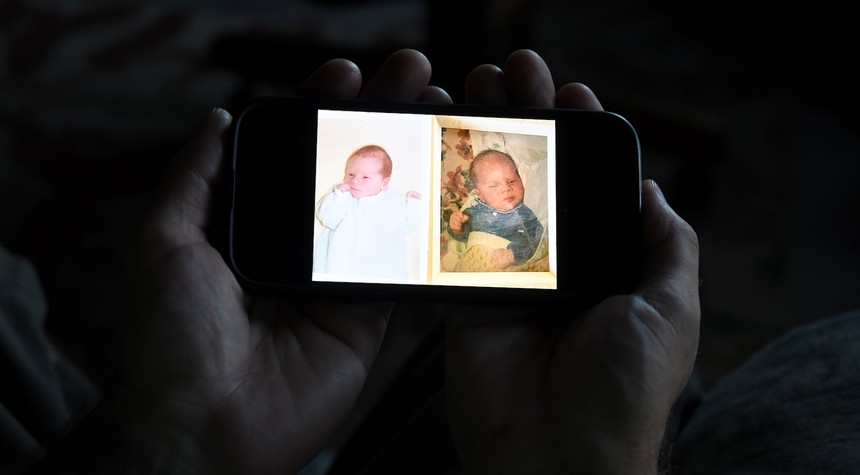
Two North Dakota families are pursuing legal action against a hospital after discovering that their sons were switched at birth 38 years ago, a revelation that came to light through modern DNA testing technology.
Kyle Bylin and Jeremy Morrison, both now 38 years old, learned of the mix-up through a series of unexpected events that began with a simple holiday gift exchange. Bylin had selected an at-home DNA testing kit randomly during a Christmas celebration, viewing it as nothing more than a casual family activity. The results, however, would upend everything he understood about his identity.
The test connected Bylin to his biological aunt through a genealogy platform. This connection prompted further investigation, leading to Jeremy Morrison, the aunt’s nephew, who then submitted his own DNA for testing. The scientific evidence was conclusive and undeniable.
“That’s when my mind was just completely blown,” Bylin stated. “We could have never imagined that it was an actual birth switch that occurred.”
Morrison reported that he became convinced of the switch immediately upon seeing a photograph of Bylin’s brother, noting the striking physical resemblance between them. The two men were the only infants born on January 26, 1986, at the North Dakota medical facility in question.
The families are now alleging that the hospital’s error robbed both men of the lives they were meant to live. Such claims raise profound questions about institutional responsibility and the long-term consequences of medical mistakes. The lawsuit represents not merely a financial claim but an attempt to hold accountable those responsible for an error that fundamentally altered the course of two families’ lives.
This case joins a small but significant number of similar incidents that have come to light in recent years, largely due to the widespread availability of consumer DNA testing. These technologies, which have become increasingly popular for genealogical research, have inadvertently exposed hospital errors that might otherwise have remained hidden indefinitely.
The legal proceedings will likely examine hospital protocols from 1986, staff procedures in the maternity ward, and whether adequate safeguards were in place to prevent such mix-ups. The case also highlights the broader implications of institutional negligence and the question of what recompense, if any, can adequately address the profound disruption caused by such an error.
For the two men and their families, the discovery has necessitated a complete reassessment of their identities and family relationships. The emotional and psychological impact of learning that one’s entire life has been based on a fundamental mistake cannot be easily quantified, though the legal system will now attempt to do precisely that.
As DNA testing becomes increasingly commonplace in American households, similar discoveries may continue to surface, forcing medical institutions to confront errors from decades past and prompting renewed emphasis on patient safety protocols in maternity wards across the nation.
Related: Federal Employee Made Over $100,000 Betting on Trump Speech Content Using Inside Knowledge
