
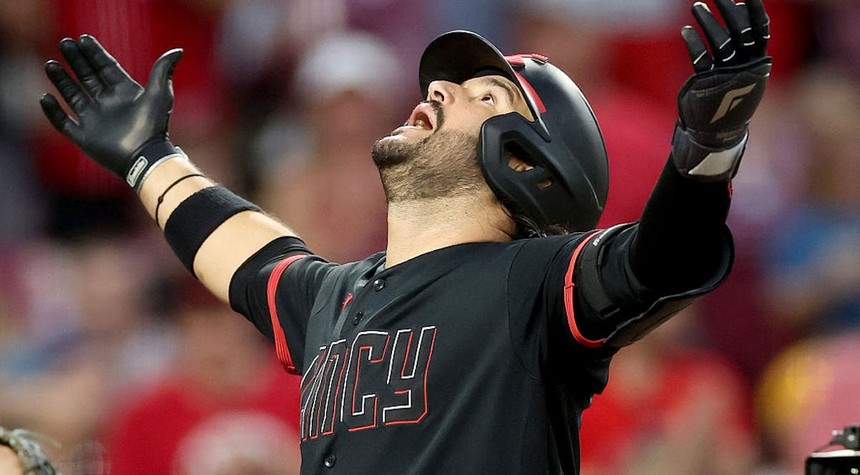
Cincinnati Reds third baseman Eugenio Suarez returned to the diamond this week with more than just his batting skills refreshed. The Venezuelan native had taken two games off in early September to complete his United States naturalization test, and his teammates marked the occasion in a manner befitting America’s pastime.
As Suarez stepped to the plate for his first at-bat as a newly minted American citizen, the familiar strains of his walk-up music gave way to Lee Greenwood’s “God Bless the USA.” The gesture from his teammates served as both celebration and acknowledgment of a significant personal milestone.
Suarez’s path to this moment began years ago when he was recruited from Venezuela to play professional baseball, first with the Detroit Tigers. His career has taken him through several Major League Baseball organizations before he returned to Cincinnati in February of this year. The timing of his citizenship test presented a challenge that extended beyond the examination itself.
The absence came at a particularly inopportune moment in athletic terms. Suarez had been performing exceptionally well in August, launching six home runs and driving in 20 runs while posting an .852 on-base plus slugging percentage. In baseball, where momentum and rhythm can prove as valuable as raw talent, a two-game break carries risk. The scheduling of citizenship tests, however, does not accommodate the conveniences of professional athletics, and Suarez worked within the parameters he was given.
Any concerns about lost momentum proved unfounded. In that same game, during his second at-bat as an American citizen, Suarez delivered a three-run home run that put the Reds ahead. His performance continued the following day when he scored from second base on a wild pitch, demonstrating the form that had made August such a productive month.
The contrast between Suarez’s celebration of American citizenship and certain other athletes’ public stances has not gone unnoticed. The quiet dignity of Suarez’s approach to becoming an American stands in marked distinction to those who have chosen to use their platform for protest rather than appreciation.
This story represents something larger than baseball statistics or one player’s personal achievement. It speaks to the enduring appeal of American citizenship and what it represents to those who choose to pursue it through proper legal channels. Suarez did not have to become an American citizen to continue his baseball career. He chose to do so, and his teammates’ response suggests they understood the significance of that choice.
In an era when patriotism in professional sports has become complicated by political gestures and protests, Suarez’s straightforward pride in his new citizenship offers a refreshing alternative. His journey from Venezuela to the major leagues, culminating in American citizenship, embodies the immigrant story at its most aspirational.
The facts speak plainly. A professional athlete took time away from his career to become an American citizen, returned to celebrate that citizenship through his performance, and received recognition from his peers for doing so. That is the way it has been, and the way it should be.
Related: Air Force Veteran Purchases Southern Estate Only to Uncover His Family’s Hidden History
