
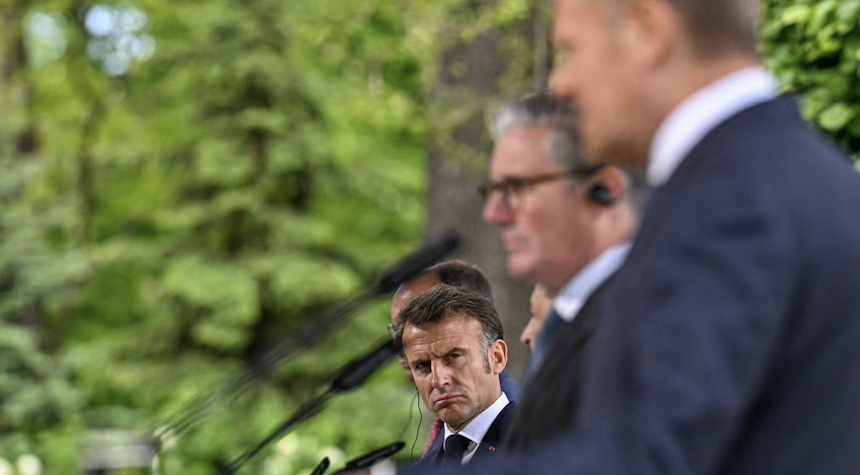
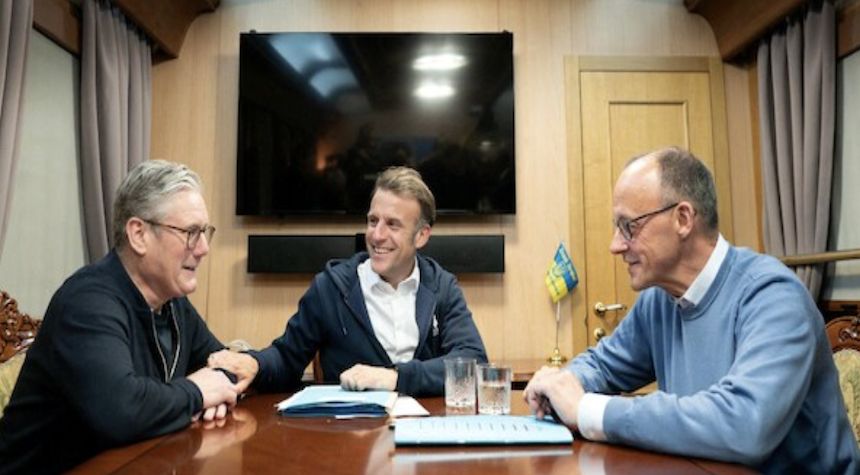
The story unfolds like this. Emmanuel Macron, the president of France, is caught in the crosshairs of a social media storm. A video of him retrieving a crumpled white object from a table on a train ride to Kyiv has led to talk that he carried a bag of cocaine. This train ride was no ordinary jaunt, but one in which he was accompanied by German Chancellor Friedrich Merz and British Prime Minister Keir Starmer, making the allegations even more explosive.
The Elysée Palace, the official residence of the French president, quickly hit back. “This is a tissue. For blowing your nose,” they clarified on social media. It’s a case, they say, of seeing a mountain in a molehill, of disinformation being weaponized to cast aspersions on European unity.
Accusations of disinformation are as old as diplomacy itself. The Elysée Palace claims that France’s adversaries are behind this latest episode. And while they didn’t point fingers, the Russian foreign ministry spokesperson, Maria Zakharova, was noted as one among those sharing the contentious video.
Jean-Noël Ladois, Macron’s new international spokesman, is credited with taking a more aggressive stance against such disinformation, a signal that they’re not going to take this lying down. “It’s by denying them when they emerge that we weaken them,” an Elysée official told Politico.
In this digital age, where the line between fact and fiction can often be as thin as tissue paper, the stakes couldn’t be higher. In this case, it seems like the truth is lacing up and chasing down the rumors.
Macron and his team are vehemently denying the allegations, blaming disinformation for the controversy. But this story, like a Texas tumbleweed, seems destined to roll on. And as it does, we’ll keep watching and keep reporting.
In the grand scheme of things, this incident serves as a stark reminder of the power and peril of social media in shaping narratives.
