
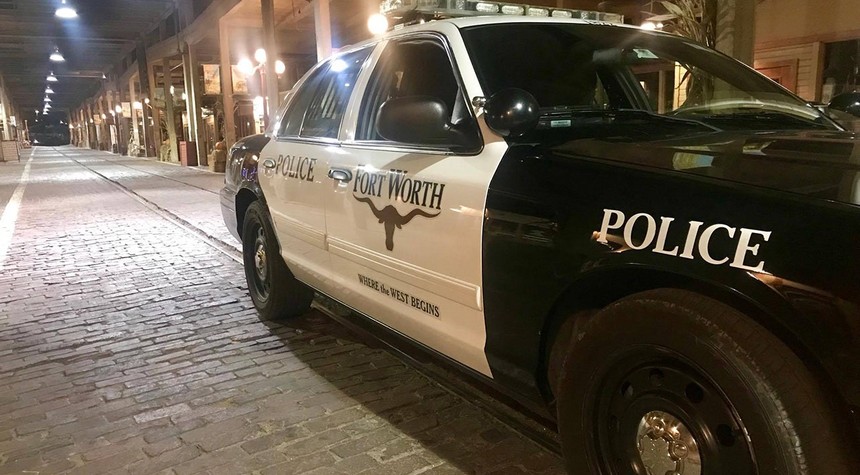
The Fort Worth Police Department has acknowledged that officers made inaccurate statements during a confrontation with a Christian street preacher outside a Pride festival last month, though the department maintains the citation issued was based on noise violations rather than speech content.
The incident, which occurred on June 27 at Trinity Pride Fest, has drawn national attention after video footage circulated widely on social media platforms. The videos captured Fort Worth police officers making statements that the department now concedes were incorrect regarding what constitutes citable offenses.
According to the police department’s account, officers responded to complaints from nearby business owners who reported that amplified sound from a preacher using a bullhorn disrupted their operations and drove customers away. The department stated that the preacher received warnings about the city’s noise ordinance before ultimately being cited for disorderly conduct after continuing to use the amplification device.
The controversy centers on statements made by officers during the encounter. In video footage posted online, a male officer suggested that referring to a biological male as “sir” constituted a “gray area” and indicated he might issue citations for “offensive” language. A female officer was recorded stating, “If someone is offended by your talking, then we have a problem.”
These statements have raised significant concerns about First Amendment protections and the proper application of municipal ordinances. The Fort Worth Police Department has since clarified that such characterizations were inaccurate, though the department continues to assert that the citation itself was justified based solely on noise ordinance violations.
The incident reflects broader tensions emerging across the nation regarding the intersection of religious expression, public order, and events celebrating alternative lifestyles. Similar confrontations have occurred in numerous cities as communities navigate competing claims of rights and sensibilities in public spaces.
The preacher involved, Rich Penkoski, who identifies himself on social media as a Christian street preacher, posted the videos that brought the incident to widespread attention. The footage has been viewed hundreds of thousands of times and sparked debate about police conduct and the boundaries of protected speech.
Legal experts note that while municipalities possess authority to enforce reasonable time, place, and manner restrictions on speech, including noise ordinances, officers must apply such regulations in a content-neutral manner. The suggestion that the content of speech itself could warrant citation raises constitutional questions that extend beyond the specific circumstances in Fort Worth.
The acknowledgment by the Fort Worth Police Department that officers made inaccurate statements represents an unusual admission, though questions remain about what training or policy changes, if any, will result from the incident. The department has not indicated whether the officers involved will face disciplinary action or additional training regarding First Amendment protections.
As communities across America continue to host public events celebrating various causes and identities, incidents such as this one underscore the ongoing challenge of balancing competing rights and maintaining proper enforcement of legitimate public order regulations without infringing upon constitutionally protected expression.
Related: Catholic Order Housed Convicted Child Abusers While Claiming Financial Hardship
