
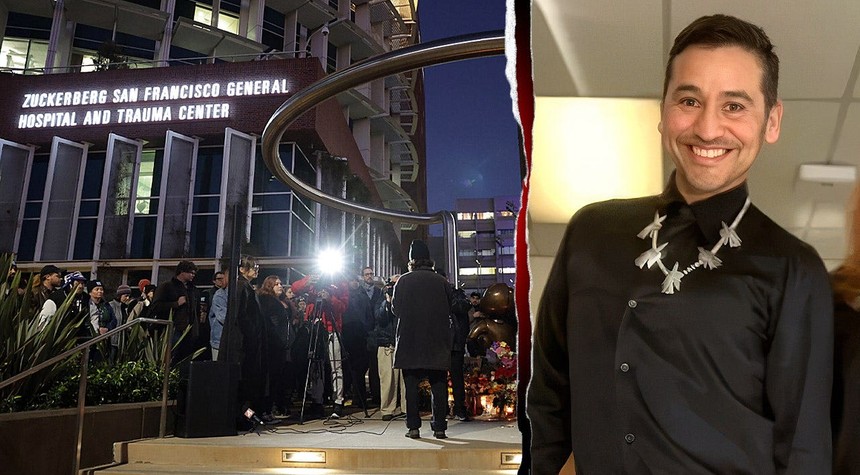
A fatal stabbing inside a San Francisco hospital has thrust California’s sanctuary policies back into the national spotlight, with federal immigration authorities directly challenging state officials to maintain custody of the suspect.
Wilfredo Jose Tortolero-Arriechi, a Venezuelan national in the country illegally, stands accused of fatally stabbing 51-year-old Alberto Rangel inside Zuckerberg San Francisco General Hospital on December 4. Rangel died from his injuries two days later.
U.S. Immigration and Customs Enforcement has lodged a detainer request with California authorities, asking that Tortolero-Arriechi remain in custody following any resolution of state charges. The request represents the latest flashpoint in an ongoing conflict between federal immigration enforcement and California’s sanctuary state laws, which significantly limit cooperation between local law enforcement and federal immigration authorities.
According to the Department of Homeland Security, Tortolero-Arriechi had previously been encountered by Border Patrol and released. Federal officials are now pointing to this case as evidence of systemic failures in both border security and state-level immigration enforcement.
The timing of this incident carries particular weight. San Diego County Supervisor Jim Desmond has been vocal in his criticism of Governor Gavin Newsom’s sanctuary policies, citing two recent deadly crashes involving illegal migrants and another case where a rejected ICE detainer preceded the death of an 11-year-old child.
These accumulating incidents have intensified the debate over California’s approach to immigration enforcement. Supporters of sanctuary policies argue they encourage cooperation between immigrant communities and law enforcement, making cities safer overall. Critics contend these policies create unnecessary risks by preventing the detention of individuals who have entered the country illegally and may pose public safety threats.
The fundamental question now facing California officials is whether they will honor ICE’s detainer request. Under current state law, local jurisdictions have broad discretion to decline such requests, particularly in cases where federal authorities have not obtained a judicial warrant.
Federal immigration officials have made their position clear. They are urging Governor Newsom and state authorities to maintain custody of Tortolero-Arriechi, arguing that his release would compound the failures that allowed this tragedy to occur.
The case underscores the real-world consequences of policy decisions made at both the federal and state levels. A man went to a hospital and lost his life in what should have been a place of healing and safety. His family now mourns while policymakers debate the broader implications.
As this case proceeds through the criminal justice system, it will serve as a test of California’s commitment to its sanctuary policies in the face of mounting federal pressure and growing public concern over preventable tragedies. The outcome may well influence how other sanctuary jurisdictions across the nation approach similar situations in the future.
For now, Alberto Rangel’s death stands as a stark reminder that immigration policy debates involve more than abstract principles. They involve human lives, public safety, and the fundamental question of how federal and state governments should balance competing obligations to enforce the law and protect their citizens.
Related: Two Bank Workers Killed in Robbery South of Lexington
