
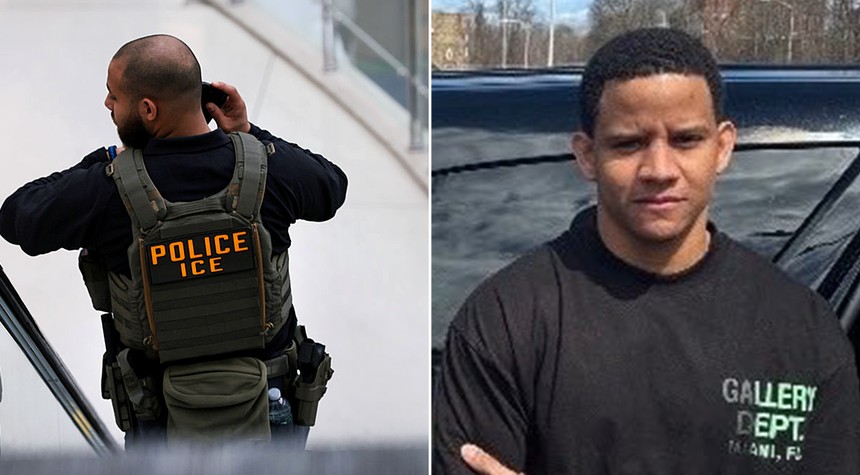
A Dominican Republic national subject to both a deportation order and an Interpol Red Notice for homicide has been released from federal immigration custody following a court order from a judge appointed during the Biden administration.
U.S. District Judge Melissa DuBose of Rhode Island ordered the release of Bryan Rafael Gomez from Immigration and Customs Enforcement custody on Tuesday, ruling that the agency had engaged in “continuous unlawful detention.” The decision came despite ICE’s argument that Gomez was subject to mandatory detention due to an international arrest warrant for murder.
Judge DuBose determined that ICE had detained Gomez under legal authority specifically designed for migrants apprehended at the border. According to her ruling, this statute did not apply to Gomez because local police arrested him inside the United States rather than at a port of entry. The court found Gomez was entitled to a bond hearing rather than mandatory detention under the statute ICE had cited.
The Department of Homeland Security reports that ICE cannot rearrest Gomez due to the terms of DuBose’s order.
The case began on April 4 when Gomez was arrested for assault and battery in Worcester, Massachusetts. After posting $500 bail, ICE Boston took him into custody following a detainer request. He had been held in Rhode Island, where an immigration judge issued a deportation order on Tuesday, the same day Judge DuBose ordered his release from ICE custody.
The Department of Homeland Security issued a sharp rebuke of the decision. Acting Assistant Secretary of Public Affairs Lauren Bis characterized the ruling as judicial activism interfering with immigration enforcement.
“Bryan Rafael Gomez is a criminal illegal alien from the Dominican Republic with an international warrant for homicide,” Bis stated. “An activist judge appointed by Joe Biden released this wanted murderer back into American communities.”
Bis framed the decision as part of a broader pattern of judicial resistance to the current administration’s immigration enforcement priorities. “This is yet another example of an activist judge trying to thwart President Trump’s mandate from the American people to remove criminal illegal aliens from our communities,” she said.
The statement emphasized the administration’s determination to continue pursuing the removal of individuals in the country illegally who have criminal records or outstanding warrants. “Under President Trump and Secretary Mullin, DHS will continue to fight for the removal of criminal illegal aliens who have no right to be in our country,” Bis concluded.
The case highlights ongoing tensions between federal immigration authorities and the judiciary over detention procedures and the scope of executive authority in immigration enforcement. The legal dispute centers on technical questions about which detention statutes apply to individuals arrested inside the United States versus those apprehended at the border.
That is the way it is.
Related: Meta Tracks Employee Computer Activity to Train Artificial Intelligence Systems
