
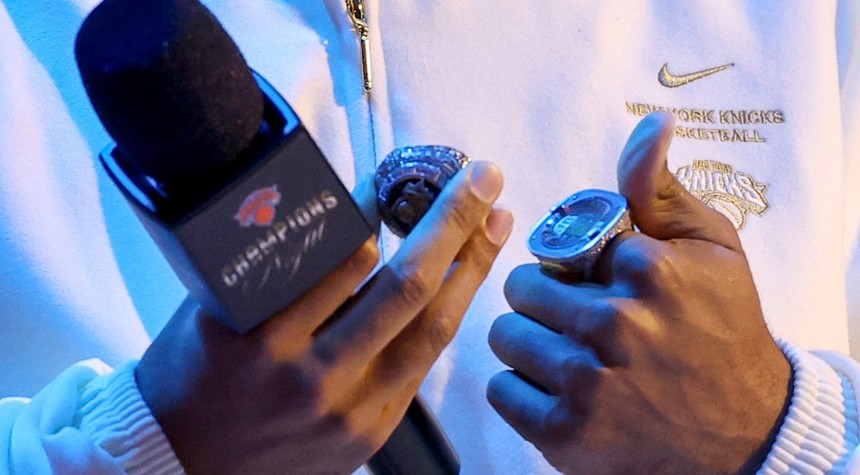
Madison Square Garden Sports announced this week it will distribute more than $3.7 million worth of championship rings and jewelry to members of the New York Knicks organization after what the company termed an “unfortunate mistake” in its cybersecurity protocols.
The controversy began when MSG Sports sent an email to corporate employees offering them complimentary Knicks championship rings. When employees clicked the link to claim their rings, they were instead redirected to mandatory cybersecurity training. The email was designed as a simulated phishing attack intended to test employee awareness of digital security threats.
The company defended its initial approach by noting the serious nature of the threat it faces. “MSG was recently hacked and extorted using an employee login and password obtained through a similar phishing attack,” the company stated. The simulation was meant to strengthen defenses against such intrusions in the future.
However, the decision to use championship rings as bait for the security test drew sharp criticism. The choice was particularly ill-considered given the significance such rings hold within professional sports organizations, where they represent tangible recognition of achievement and dedication.
The matter escalated when reports emerged that during the ring ceremony held before the Knicks’ first game of the season on Tuesday, assistant coaches received empty boxes. These staff members had been informed earlier that day they would eventually receive their rings, but not during the ceremony itself.
In response to the mounting criticism and apparent oversight, Madison Square Garden Sports reversed course entirely. The company announced it will now provide more than 275 rings and pieces of jewelry to players, coaches, employees, and others throughout the Knicks organization. The total value of this distribution exceeds $3.7 million.
The episode highlights the delicate balance companies must strike between maintaining robust cybersecurity measures and respecting employee morale. While phishing simulations have become standard practice in corporate security protocols, the choice of incentive in this case proved counterproductive.
The incident also reflects broader challenges facing organizations in an era of increasing cyber threats. Companies face genuine risks from sophisticated phishing attacks that can compromise sensitive data and systems. The admission that MSG had previously fallen victim to such an attack underscores the legitimate security concerns driving the training initiative.
Nevertheless, the execution revealed a disconnect between security objectives and organizational culture. In professional sports, championship rings carry symbolic weight that extends beyond mere material value. They represent collective achievement and organizational appreciation.
Madison Square Garden Sports’ decision to ultimately provide the rings suggests recognition that the cost of damaged employee relations outweighed any security training benefits gained from the controversial simulation. The company’s willingness to invest $3.7 million to correct the situation indicates the seriousness with which it views the matter.
The question now is whether other organizations will take note of this incident when designing their own security awareness programs, perhaps choosing less emotionally charged methods to test employee vigilance against cyber threats.
