
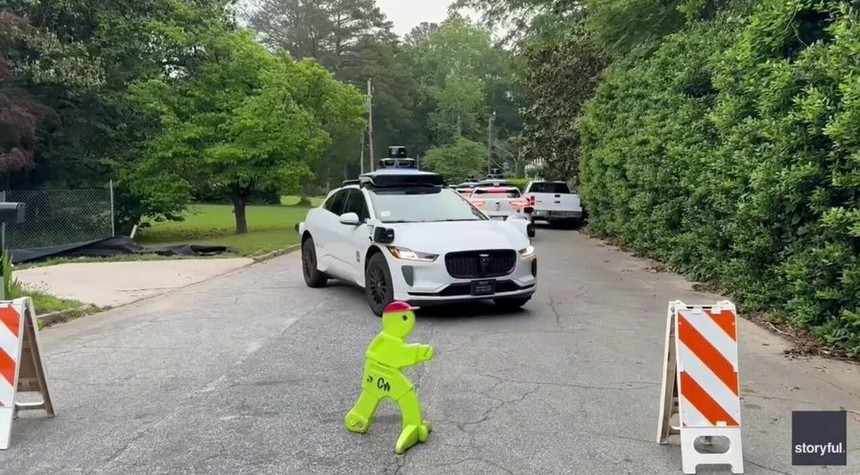
Residents of the Buckhead neighborhood in northwest Atlanta are confronting an unexpected consequence of the autonomous vehicle age as dozens of empty, self-driving Waymo vehicles have been circling their residential streets for the past two weeks.
The situation has transformed quiet cul-de-sacs into thoroughfares for the driverless ride-share vehicles, which appear to be caught in a routing behavior malfunction. Neighbors on Battleview Drive and surrounding streets report that the vehicles repeatedly loop through their residential areas without passengers or apparent purpose.
“It’s almost every little cul-de-sac in our area, so I think it’s a problem,” one resident told a local television station. Video footage from the neighborhood shows multiple Waymo vehicles continuously circling through residential streets, with some instances showing traffic backups after residents attempted to block the autonomous cars from entering their cul-de-sac.
The volume of traffic has been substantial. One neighbor reported counting approximately 50 vehicles passing through between 6 and 7 o’clock on a single morning. What began as a curiosity has evolved into a safety concern for families living in the affected area.
“We’re families, we have small animals and pets, got kids getting on the bus in the morning and it just doesn’t feel safe to have that traffic,” another resident explained.
Waymo, which currently operates in eleven cities across the United States, including Atlanta, has acknowledged the issue. The company explained that its vehicles are staged in areas where ride requests frequently originate, a practice designed to reduce customer wait times. However, company representatives conceded that such operational efficiency should not come at the expense of residential neighborhoods.
This incident in Atlanta adds to growing scrutiny of autonomous vehicle operations in urban environments. The technology, while promising significant advances in transportation, continues to face practical challenges as it integrates into existing residential and commercial areas.
The Buckhead situation highlights the delicate balance between technological innovation and community impact. As autonomous vehicles become more prevalent in American cities, questions about their operational parameters in residential neighborhoods will likely require clearer guidelines and more responsive systems.
For now, Buckhead residents await a resolution that will restore their streets to normal traffic patterns while Waymo works to address the routing behavior causing the unusual concentration of vehicles in their neighborhood. The company has not provided a specific timeline for resolving the issue, leaving residents to navigate the daily presence of the circling autonomous vehicles.
The matter serves as a reminder that even the most advanced technology requires ongoing refinement, particularly when it intersects with the daily lives of American families in their own neighborhoods.
Related: Wife Learns Husband’s True Identity Through Investigator’s Phone Call
