
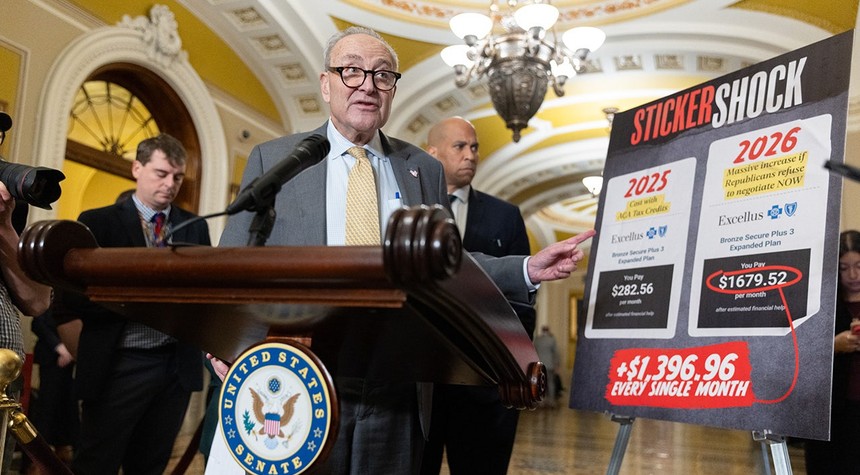
Senate Democrats have put forward their proposal to extend expiring Affordable Care Act subsidies, though the measure faces significant hurdles in securing Republican support needed for passage.
Senate Minority Leader Chuck Schumer announced Thursday that his caucus would introduce legislation for a straightforward three-year extension of current healthcare tax credits, which are set to expire at the end of this year. The Democratic plan contains no modifications or reforms to the existing subsidy structure.
“I’m announcing that Senate Democrats will introduce legislation for a clean, three-year extension of the current tax credits,” Schumer stated from the Senate floor. “This is the bill, a clean, three-year extension of tax credits that Democrats will bring to the floor of the Senate for a vote next Thursday. And every single Democrat will support it.”
The Senate Democratic approach mirrors the strategy already proposed by House Democrats, both chambers opting for extension without amendment. This represents a departure from earlier bipartisan discussions that appeared to be gaining traction before ultimately dissolving.
The subsidies in question provide financial assistance to millions of Americans purchasing health insurance through the Affordable Care Act exchanges. Their expiration would result in substantially higher premium costs for those currently benefiting from the tax credits, potentially forcing some individuals out of the insurance market entirely.
However, Senate Republicans have shown little inclination to support a clean extension. Republican lawmakers have instead advocated for reforms to accompany any extension, with particular emphasis on expanding Health Savings Accounts as an alternative approach to making healthcare more affordable.
The partisan divide over how to proceed underscores the continuing political tensions surrounding the Affordable Care Act, more than a decade after its initial passage. Democrats argue that allowing the subsidies to lapse would harm working families who depend on them for affordable coverage. Republicans counter that simply extending the current system without reforms perpetuates inefficiencies and missed opportunities for genuine healthcare improvements.
The timing adds urgency to the debate. With the subsidies set to expire in a matter of months, failure to reach an agreement would have immediate practical consequences for healthcare consumers preparing for the next enrollment period.
What had briefly appeared to be promising bipartisan negotiations have given way to the current impasse, with each party now advancing its preferred approach independently. The Democratic proposal scheduled for a vote next week will serve as a test of whether any Republicans might cross party lines, though current indications suggest unified Republican opposition.
The outcome will determine whether millions of Americans see their healthcare costs increase substantially or whether some compromise can yet be fashioned before the deadline arrives. For now, the two parties remain far apart on the fundamental question of whether to extend the subsidies as they currently exist or to use the expiration as leverage for broader healthcare policy changes.
Related: FBI Arrests Suspect in 2021 Pipe Bomb Investigation After Nearly Five Years