
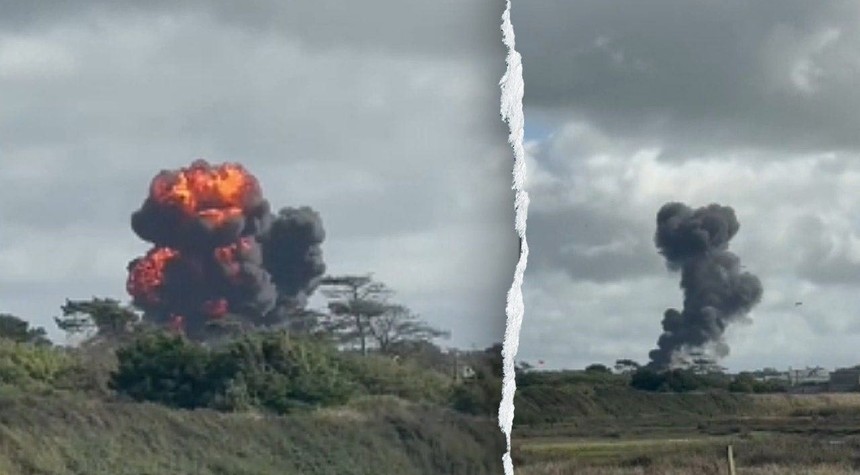
Two Royal Air Force pilots successfully ejected from their training aircraft moments before it crashed in a fiery explosion in Wales on Wednesday, marking another incident involving military aviation training operations.
The Royal Air Force confirmed that the Hawk T2 aircraft went down near Anglesey after departing from RAF Valley base in northwestern Wales. Video footage captured by a local resident shows the dramatic sequence of events as both pilots parachuted to safety while a fireball erupted across the Welsh countryside below them.
The RAF reported in an official statement that both pilots are in remarkably good condition following the incident. “Both pilots are doing well, they are in extremely good spirits and expected to make a full recovery,” the service announced. The pilots’ successful ejection and safe landing demonstrate the effectiveness of modern aircraft safety systems designed precisely for such emergencies.
In response to the crash, the Royal Air Force has taken the precautionary step of temporarily grounding all Hawk T1 and Hawk T2 training operations. A formal investigation has been launched to determine the circumstances that led to Wednesday’s incident. The cause of the crash remains unknown at this time.
The Hawk T2 represents a sophisticated piece of military training equipment. According to the RAF’s technical specifications, the aircraft is a high-performance, two-seat training jet equipped with advanced avionics and synthetic radar systems designed to simulate front-line combat aircraft such as the Typhoon fighter jet. The aircraft serves as the primary platform for advanced jet training within the RAF, preparing pilots to operate in complex tactical environments that mirror actual combat conditions.
This incident follows a pattern of training aircraft emergencies that have occurred across various military services in recent years. The successful ejection of both pilots underscores the importance of rigorous safety protocols and reliable emergency systems in military aviation training programs.
The temporary grounding of the Hawk training fleet, while disruptive to the RAF’s pilot training pipeline, represents a prudent approach to aviation safety. Military services worldwide typically implement such precautionary measures following significant incidents to ensure no systemic issues exist that could endanger additional aircrews.
The investigation will likely examine multiple factors including mechanical systems, maintenance records, weather conditions, and operational procedures. Such inquiries typically take weeks or months to complete as investigators meticulously review all available data and evidence.
For now, the most significant outcome remains the safe recovery of both pilots, who avoided what could have been a fatal situation through quick decision-making and properly functioning ejection systems. The RAF has not indicated when Hawk training operations might resume, stating only that the pause will remain in effect as a precautionary measure during the investigation.
Related: Doctor Stabbed to Death While Sleeping as Children Flee to Safety
