
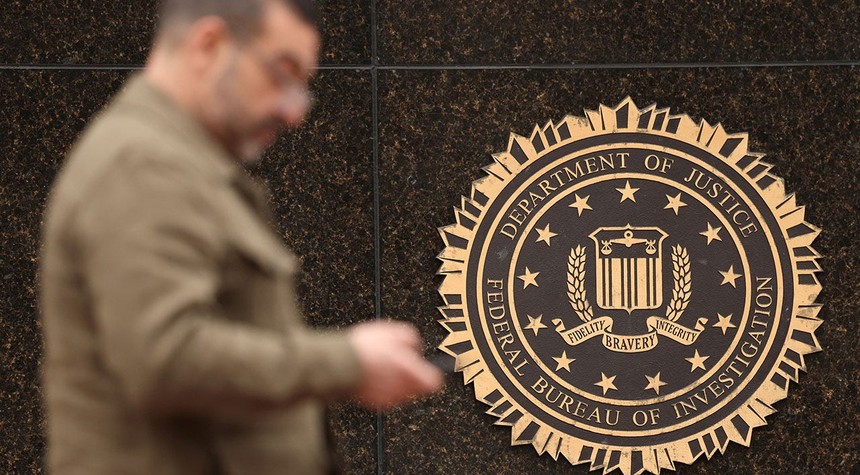
The Federal Bureau of Investigation has confirmed it is conducting an active investigation into claims by a criminal hacking group that it obtained personal information belonging to FBI employees through the bureau’s jobs website.
The bureau acknowledged the incident Thursday, stating that a cyber-criminal enterprise group has asserted it compromised the FBIJobs.gov portal and accessed personally identifiable information of FBI employees. The investigation remains in its preliminary stages, with authorities working to determine whether the breach originated within the FBI’s own systems or through a third-party service provider that supports the jobs portal.
“While the point of breach is still undetermined, we are actively and aggressively investigating this matter and working closely with those third-party providers that support FBIJobs.gov to mitigate any and all risk,” the FBI stated.
A criminal organization known as ShinyHunters has claimed responsibility for the breach, asserting it obtained information on nearly all FBI agents as well as individuals who applied for positions with the bureau. The data allegedly includes agents’ names, home addresses, Social Security numbers, work assignments, and in certain cases, names of family members.
Jason Pack, a retired FBI supervisory special agent who now leads Media Rep Global Strategies, emphasized an important distinction that investigators must establish as they assess the full scope of this incident. There exists a significant difference between unauthorized access to personnel records and penetration of the FBI’s classified investigative systems.
“Based on what we know right now, there is no indication they have the keys to the kingdom,” Pack stated, noting that current evidence does not suggest hackers gained access to classified FBI systems.
However, the combination of personal information with details about an FBI employee’s assignments creates legitimate security concerns. When adversaries possess knowledge of an individual’s identity, workplace, and specific duties, they can construct more convincing and targeted schemes.
“If an adversary knows who somebody is, where they work and what they do, they can build a much more believable scam around that person,” Pack explained.
Beyond immediate concerns about identity theft or fraud, the breach carries potential counterintelligence implications. Assignment information in the hands of foreign intelligence services could prove valuable for identifying individuals of operational interest.
Pack outlined this concern with measured clarity. Foreign intelligence services capable of connecting specific personnel with particular assignments gain the ability to identify individuals they may wish to learn more about, approach, or potentially assess for recruitment purposes. He was careful to note that no evidence suggests such activity has occurred in this instance, but the possibility underscores why assignment information holds value to adversarial entities.
The investigation continues as the FBI works to secure its systems and determine the full extent of any compromise. The bureau has not disclosed how many employees may have been affected or what specific mitigation measures are being implemented to protect personnel whose information may have been exposed.
This incident adds to growing concerns about cybersecurity vulnerabilities affecting government agencies and the persistent threat posed by sophisticated criminal hacking organizations.
Related: Marvel Actress Calls Celebrities Who Avoid Politics Cowardly and Bizarre
