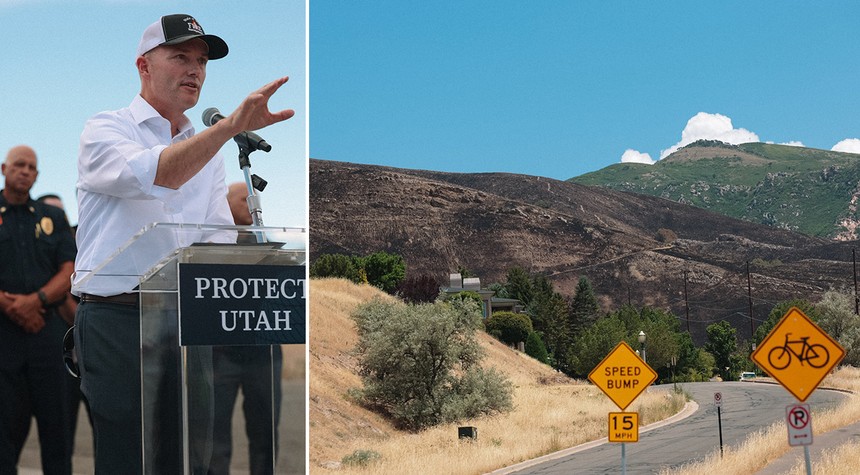
Utah Governor Spencer Cox issued an emergency executive order Thursday imposing a temporary statewide ban on fireworks ahead of the Independence Day weekend, a decision driven by what officials are calling unprecedented wildfire conditions throughout the state.
The Republican governor’s executive order declares a state of emergency and temporarily suspends existing state law, granting the state forester authority to prohibit the discharge of fireworks within municipal boundaries from July 2 through July 5. The restrictions come as 94 percent of Utah faces severe or extreme drought conditions in the lead-up to America’s 250th anniversary celebrations.
The severity of the situation is reflected in the numbers. Utah has already experienced 354 wildfires this season, consuming nearly 142,000 acres of land. More troubling still, state officials report that over 75 percent of these fires have been caused by human activity.
The governor’s order does provide a measure of flexibility for local communities. Municipal leaders, working in coordination with their fire chiefs, retain the authority to designate specific safe areas where fireworks may still be discharged. However, if local officials decline to identify such locations, the state forester’s blanket prohibition remains in full force.
“Nothing about this decision was easy,” Governor Cox acknowledged in his official statement. “But this year is different. We are seeing fire behavior that even our most experienced firefighters say they’ve never witnessed before.”
The governor emphasized that the primary objective is ensuring Utah neighborhoods and communities remain intact beyond the holiday weekend. The danger to lives, homes, and firefighters, he stated, “is simply too high.”
Utah State Forester Jamie Barnes provided additional context for the emergency measures, explaining that prolonged drought conditions, critically dry vegetation, and extreme weather patterns are causing wildfires to spread with unprecedented speed and behave in ways that “defy historical expectations.”
To prevent avoidable fires, the Utah Department of Public Safety has announced increased patrols in high-risk areas throughout the holiday period. Officials have issued stern warnings that individuals who spark illegal wildfires may face substantial criminal charges and civil liability.
The restrictions represent a significant departure from traditional Independence Day celebrations in the state, where fireworks have long been a centerpiece of holiday festivities. Yet state officials maintain that extraordinary circumstances demand extraordinary measures.
Looking beyond the immediate holiday, state officials indicated they will reassess wildfire danger levels following the Independence Day weekend. This evaluation will determine whether similar restrictions will be necessary for Utah’s Pioneer Day holiday, scheduled from July 22 through July 25.
The decision underscores the growing challenge western states face as climate conditions create increasingly hazardous fire seasons. For Utah residents accustomed to marking the nation’s independence with pyrotechnic displays, this Fourth of July will require alternative forms of celebration as public safety takes precedence over tradition.
Related: Israeli Strike in Lebanon Kills Three as Ceasefire Faces New Test