
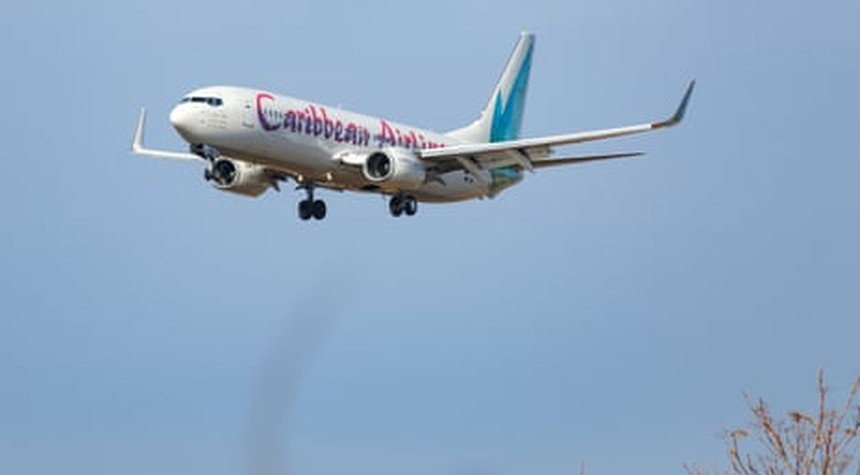
A Caribbean Airlines flight from Kingston, Jamaica, arrived at John F. Kennedy International Airport on Saturday carrying one additional passenger who was not aboard at takeoff. A woman gave birth during the four-hour journey, creating what may prove to be a complex legal situation regarding the infant’s citizenship status.
The airline confirmed the medical event occurred on flight BW005 but provided limited details about the circumstances. The carrier’s statement indicated that medical personnel attended to both mother and child upon landing, and both are receiving appropriate care. The airline has not disclosed the infant’s gender or the precise moment during the flight when the birth took place.
Air traffic control recordings reveal a lighthearted exchange between the pilot and controllers at the Queens airport. When asked whether the baby had been delivered, the pilot confirmed the birth. A controller then suggested naming the child Kennedy, to which the pilot responded with laughter and agreement.
The birth has generated considerable discussion about the legal status of the newborn, though definitive answers remain elusive due to insufficient information about the parents’ citizenship and the aircraft’s exact location at the moment of delivery.
The matter is straightforward if either parent holds United States citizenship, as the child would automatically receive the same status. However, if neither parent is a citizen, federal law becomes the determining factor.
According to United States citizenship laws published by the State Department, American airspace extends to the same boundaries as territorial waters, specifically twelve miles from the coastline. The regulations explicitly state that rules applicable to vessels apply equally to aircraft. Therefore, a child born on an airplane within United States territory or flying over it would acquire citizenship at birth.
United States Customs and Border Protection typically requires documentation of such births, generally an excerpt from the aircraft’s medical log or captain’s log that records the time, latitude, and longitude of the birth. This information proves crucial in determining whether the birth occurred within American jurisdiction.
The Fourteenth Amendment to the Constitution establishes that all persons born or naturalized in the United States and subject to its jurisdiction are citizens. This fundamental principle of birthright citizenship has governed American law since the amendment’s ratification.
An executive order issued by President Donald Trump at the beginning of his second term attempted to restrict citizenship to children born only to citizens and lawful permanent residents. However, a federal court blocked the order, and the matter now awaits final determination by the Supreme Court following oral arguments held on April first.
The federal government does not maintain public statistics on births occurring aboard international flights within American airspace, making such incidents relatively rare occurrences that generate legal and procedural questions when they do arise.
The situation underscores the intricate nature of citizenship law and the unexpected circumstances that can arise in international travel. As authorities work to determine the precise facts of this case, the outcome will depend on careful documentation and application of existing legal frameworks governing birthright citizenship and territorial jurisdiction.
Related: New York Mayor Releases Racial Equity Plan Amid Federal Scrutiny
