
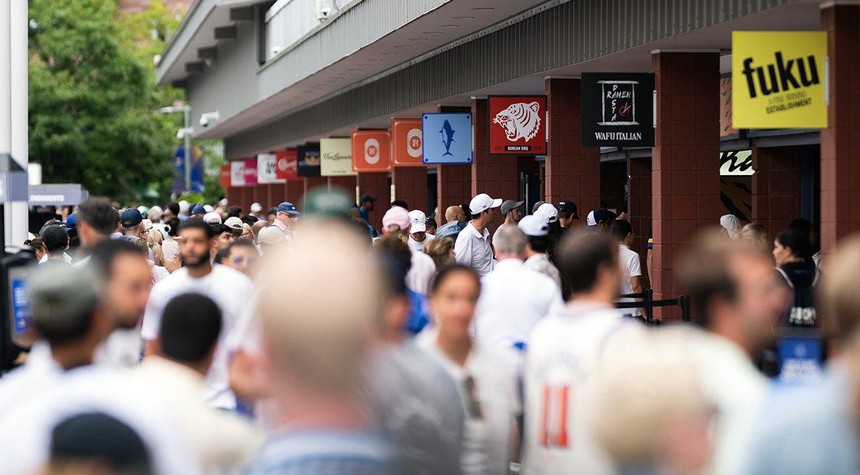
Good evening. The economic realities of attending professional sporting events have long been a subject of considerable discussion among American consumers. At the United States Open tennis championship currently underway in New York, those realities are being tested anew as spectators willingly queue for extended periods to purchase a sandwich priced at thirty-eight dollars.
The item in question is a French dip sandwich prepared by Salt Hank’s, an establishment based in Manhattan’s West Village neighborhood. According to reports from the tournament grounds, patrons are waiting in lines exceeding thirty minutes for the opportunity to purchase this particular offering, which features prime rib, provolone cheese, caramelized onions, and horseradish aioli, accompanied by shoestring fried potatoes and a serving of au jus for dipping.
The phenomenon raises substantive questions about consumer behavior at major sporting events, where elevated prices for food and beverages have become an accepted, if reluctant, component of the experience. Tournament concessions have long operated under different economic principles than traditional restaurants, with captive audiences and limited alternatives creating unique market conditions.
The French dip sandwich, a culinary staple with origins tracing to early twentieth-century Los Angeles, has demonstrated remarkable consistency in quality across various establishments. This particular version appears to have captured significant attention, both for its preparation and its price point. The combination of premium ingredients and skilled execution has evidently convinced a substantial number of spectators that the cost represents acceptable value within the context of championship tennis attendance.
However, practical considerations merit examination. The French dip sandwich presents inherent challenges for consumption in a crowded sporting venue. The au jus component, essential to the sandwich’s appeal, creates potential complications for patrons attempting to navigate tournament grounds or occupy standard stadium seating. The non-viscous nature of the beef-based sauce demands attention and stability during consumption, conditions not readily available in environments characterized by constant foot traffic and limited stable surfaces.
This represents a broader reality about premium concessions at elite sporting events. While the quality of offerings has improved substantially in recent years, with venues increasingly partnering with established restaurants and accomplished chefs, the environment itself often undermines the dining experience. A thirty-eight dollar sandwich consumed while standing or balanced precariously on one’s lap differs substantially from the same item enjoyed under proper dining conditions.
Nevertheless, the robust demand suggests spectators have calculated these factors and determined the purchase worthwhile. Tournament attendance represents a significant investment of both time and resources, and many patrons appear willing to extend that investment to include premium food options as part of the overall experience.
The success of such offerings indicates a segment of the sporting event audience seeks quality dining options and will pay accordingly, even within venue constraints. Whether this trend continues or represents a temporary phenomenon remains to be observed in future tournament seasons.
That is the way it is at the US Open this year.
Related: Sapporo Breweries to Shift Production to United States Amid Canadian Tariff Dispute
