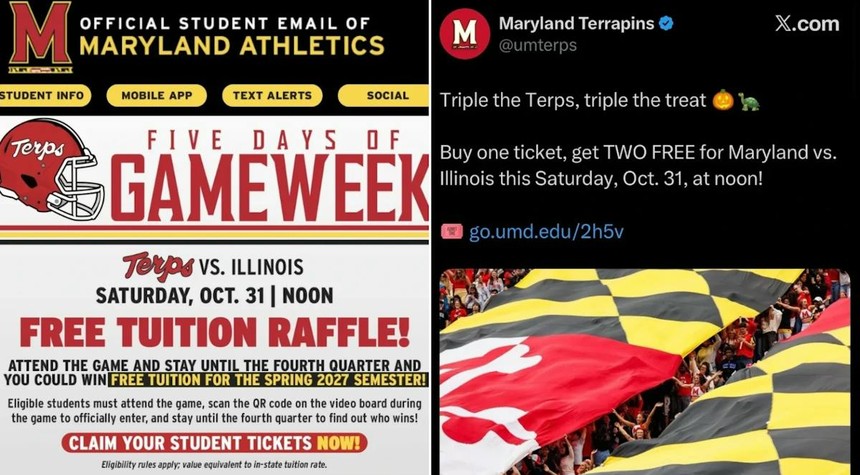
The University of Maryland has unveiled an unprecedented incentive program designed to address a troubling decline in student attendance at football games, offering one fortunate student an opportunity to win free tuition valued at approximately eight thousand dollars.
The promotion, scheduled for Saturday’s contest against Illinois, requires students to attend the game in its entirety, scan a digital code displayed on the stadium video board, and remain present through the conclusion of the fourth quarter. The tuition credit matches the university’s in-state semester rate for Spring 2027.
This is not merely an act of generosity. It is a calculated response to a program in crisis.
The Terrapins currently hold a 2-5 record and remain winless in Big Ten conference play following five consecutive defeats. The losing streak extends further when examining conference games alone, with Maryland having dropped twelve straight contests against league opponents dating back to the previous season.
These struggles proved costly for head coach Michael Locksley, who was dismissed last week during his eighth season at the helm. Under Locksley’s leadership, the program endured consecutive four-win campaigns in 2024 and 2025, performance metrics that ultimately sealed his fate.
Interim head coach Aazaar Abdul-Rahim now assumes command, with Saturday’s game marking his first home appearance in his new capacity. The university administration, meanwhile, has doubled down on attendance incentives beyond the tuition raffle.
Maryland has also implemented a buy-one-get-two-free ticket promotion for Saturday’s noon kickoff, a remarkable offer that effectively reduces individual ticket costs to one-third of face value. The combined promotional strategy suggests an athletic department willing to absorb significant short-term costs to avoid the embarrassment of a sparsely populated stadium.
The question facing Maryland extends beyond this weekend’s attendance figures. It speaks to a broader challenge confronting college athletics programs nationwide: how to maintain fan engagement when winning proves elusive.
Maryland’s approach represents a frank acknowledgment of reality. The product on the field has not merited sustained attendance, and traditional marketing efforts have proven insufficient. By offering tangible financial incentives, the university has chosen transparency over pretense.
Whether this strategy succeeds in filling seats remains to be seen. What is certain is that Maryland faces a long road ahead, both in restoring competitive football and in rebuilding the fan base that sustained earlier, more successful iterations of the program.
For one student on Saturday, the pain of watching a struggling team may yield an unexpected windfall. For the university, the true cost of these incentives will be measured not in tuition credits or discounted tickets, but in what they reveal about the current state of Maryland football.
That is the way it is, and the Terrapins must now determine how to move forward from here.
Related: Dollar General Accused of Charging Customers More Than Advertised Prices