
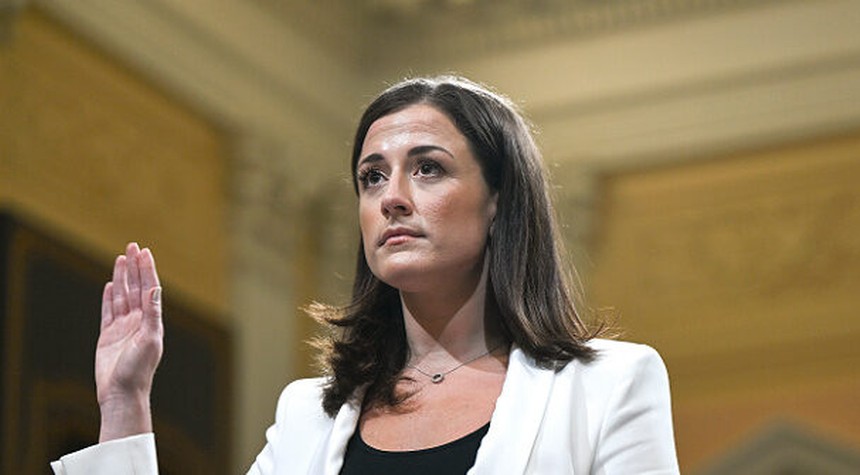
A federal grand jury in Washington has declined to indict Cassidy Hutchinson, the former White House staffer whose dramatic testimony before the House January 6 Committee captured national attention in 2022. The Justice Department had sought criminal charges against Hutchinson, though the specific allegations remain under seal due to grand jury confidentiality rules.
The decision brings to a close a prosecutorial effort that emerged from questions surrounding the accuracy of Hutchinson’s congressional testimony. Sources familiar with the matter confirmed that the grand jury heard evidence concerning possible false statements Hutchinson made to the congressional committee investigating the events of January 6, 2021.
Hutchinson’s testimony before the House committee proved to be among the most sensational moments in the panel’s public hearings. She described President Trump as angry and defiant on January 6, asserting he wanted armed protesters to bypass security screening at his rally that morning. Most notably, she testified that Trump attempted to grab the steering wheel of the presidential vehicle when the Secret Service refused to take him to the Capitol, and that he declined to intervene as violence unfolded and crowds chanted threats against Vice President Mike Pence.
However, Hutchinson acknowledged during her testimony that much of her account came secondhand from a White House security official rather than from her own direct observation. This distinction became significant when House Republicans released a transcript in 2024 of their interview with the Secret Service agent who drove the presidential vehicle. That agent contradicted key elements of Hutchinson’s account, stating he never witnessed Trump lunge toward the front seat or attempt to grab the steering wheel, though he confirmed the president was insistent about going to the Capitol.
President Trump characterized Hutchinson as a “total phony” and “bad news,” flatly denying her allegations about his conduct that day.
The grand jury’s decision not to return an indictment does not resolve the question of whether Hutchinson’s testimony was accurate or false. Under our legal system, a grand jury’s decision reflects only whether prosecutors presented sufficient evidence to establish probable cause for criminal charges. The decision to decline prosecution may reflect evidentiary challenges, credibility assessments, or prosecutorial judgment about the strength of the case.
Hutchinson has consistently maintained that she stands by her testimony. Through her legal representatives, she has indicated no intention of recanting or revising her statements to the congressional committee.
The matter underscores the complex intersection of political testimony and potential criminal liability. While witnesses before Congress testify under oath and face potential perjury charges for knowingly false statements, securing such indictments requires prosecutors to prove not merely that testimony was inaccurate, but that it was deliberately and knowingly false.
The Justice Department has not issued any public statement regarding the grand jury proceedings or the decision not to pursue charges. Federal prosecutors typically do not comment on grand jury matters, particularly when a decision has been made not to bring charges.
This development closes another chapter in the extended legal and political aftermath of January 6, though the broader debates about that day and the congressional investigation’s findings continue to resonate in American political discourse.
Related: FBI Raids Beverly Hills Mansion in Ongoing Swalwell Investigation
