
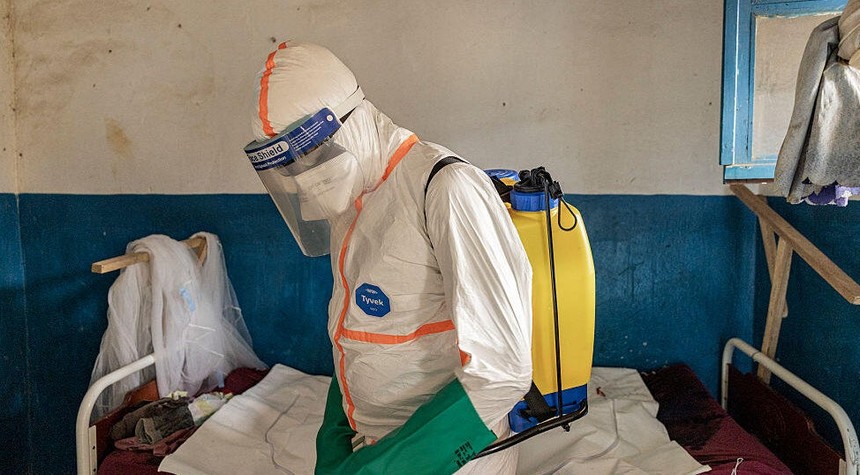
The Department of Homeland Security will implement significant travel restrictions Thursday for foreign nationals arriving from three African nations at the center of an escalating Ebola outbreak.
Under the new rule, all flights carrying foreign travelers who have been in the Democratic Republic of Congo, Uganda, or South Sudan within the previous 21 days must land at Washington-Dulles International Airport in Virginia. The directive, issued by Homeland Security Secretary Markwayne Mullin, represents a measured federal response to contain potential viral spread while maintaining necessary international travel.
The restrictions specifically target passenger flights, with cargo operations remaining unaffected. According to the rule’s text, the concentration of these travelers at a single airport allows the federal government to focus public health resources where enhanced screening measures can be most effectively implemented.
A Department of Homeland Security spokesperson confirmed that Customs and Border Protection is coordinating with airlines, international partners, and port-of-entry officials to identify and manage travelers who may have been exposed to the virus. The agency emphasized that enhanced public health screening, travel monitoring, and health protection response activities are now in effect.
The rule itself does not detail the specific protocols these foreign travelers will face upon arrival at Dulles, though federal health officials have indicated that comprehensive screening procedures are being deployed.
This action follows closely on the heels of restrictions announced Monday by the Centers for Disease Control and Prevention, which barred entry to individuals without U.S. passports who had traveled to the three affected nations within the past three weeks. The relationship between the CDC order and the new DHS rule remains unclear, though both agencies are evidently coordinating their responses to the health emergency.
The Africa Centres for Disease Control and Prevention confirmed the outbreak in eastern Congo on May 15. World Health Organization Director-General Tedros Ghebreyesus reported Wednesday that at least 600 suspected cases have been identified, including 139 suspected deaths. Health officials believe the virus circulated undetected for some time before its discovery, complicating containment efforts.
The situation has already affected American personnel abroad. A U.S. doctor working with a missionary organization in Congo contracted the virus and was transported to Germany for medical treatment. At least six Americans have been exposed to the virus, according to sources familiar with the matter.
This outbreak presents unique challenges. Health officials have identified the virus as the Bundibugyo strain, for which no approved vaccines or treatments currently exist. The World Health Organization has declared the outbreak a public health emergency of international concern, though it has not yet reached the threshold for classification as a pandemic emergency.
The federal government’s response reflects a careful balance between protecting public health and maintaining international travel connections. By channeling affected travelers through a single point of entry rather than implementing a complete travel ban, authorities aim to monitor potential cases while avoiding the economic and diplomatic complications of more severe restrictions.
The 21-day monitoring period corresponds with the established incubation period for Ebola, during which exposed individuals may develop symptoms. This scientific basis for the travel restrictions demonstrates the administration’s reliance on established medical protocols in formulating its response.
As the situation in central Africa continues to develop, federal health and security agencies have indicated they will adjust their protocols as necessary to protect American public health while supporting international efforts to contain the outbreak at its source.
Related: Prince William May Bring Royal Children to America for World Cup Visit
