
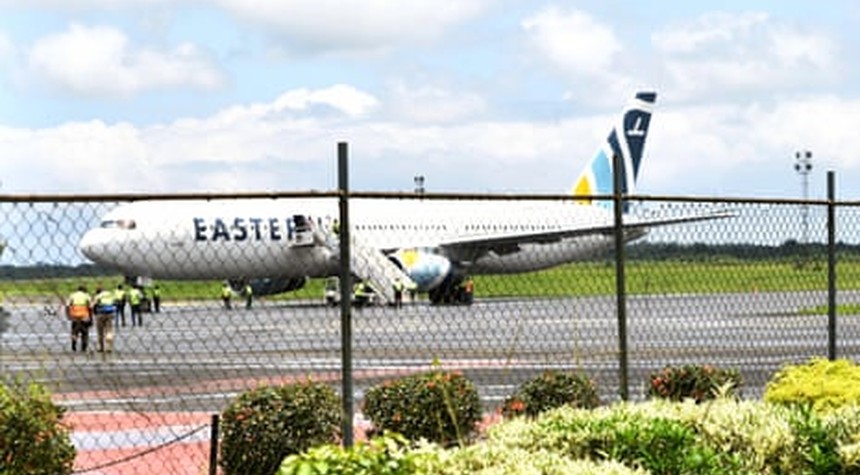
The first group of twenty deportees arrived in Liberia on Thursday under a newly negotiated agreement that represents one of the largest third-country deportation arrangements undertaken by the Trump administration since the President’s return to office.
The deportees landed at Roberts International Airport outside Monrovia, marking the initial phase of an agreement that will ultimately see Liberia accept as many as 1,200 individuals as part of the administration’s comprehensive immigration enforcement efforts.
According to Liberian Information Minister Jerolinmek Piah, the deportees will include not only African nationals but also individuals from North America, South America, and the Caribbean. Justice Minister Natu Oswald Tweh clarified during a Tuesday briefing that the majority of those being deported had committed migration-related violations and offenses. He noted that deportees would be permitted to seek asylum in Liberia should they choose to do so.
The agreement includes significant incentives for Liberia’s cooperation. The United States has agreed to extend visitor visas for Liberian citizens from twelve months to thirty-six months and has pledged $124 million in assistance to the West African nation.
This arrangement represents the largest single third-country deportation agreement to date under the current administration’s immigration enforcement strategy. A recent analysis indicates that the administration has established agreements with at least thirty-five countries and has sent approximately 23,000 individuals to twenty-six of those nations as of early August. Roughly ten of these receiving countries are located in Africa.
Immigration attorneys have characterized these third-country deportations as a legal mechanism that indirectly compels asylum seekers to return to their countries of origin. Critics note that many migrants are sent to countries they have never visited or where they may face safety concerns, leaving them with limited options beyond returning to the very nations from which they initially fled.
A February analysis by Senate Foreign Relations Committee Democrats revealed that the administration had paid more than $32 million to five governments to accept approximately 300 third-country deportees. Several of these receiving nations have documented poor human rights records. The costs included $1.1 million per person to Rwanda for seven deportees and $7.5 million to Equatorial Guinea for twenty-nine individuals, a sum that exceeded all American aid to that country over the previous eight years.
The same analysis found that more than eighty percent of those sent to third countries had subsequently returned to their home nations regardless, often at additional expense to American taxpayers. The report cited specific cases where deportees with court-ordered protections in the United States were removed to Ghana and Equatorial Guinea before being transferred onward within days.
The State Department has disputed the characterization of its enforcement record presented in these critical analyses.
The administration maintains that these agreements represent a necessary component of comprehensive immigration enforcement and border security, allowing for the orderly removal of individuals who have violated immigration laws while providing receiving countries with economic benefits and diplomatic incentives for their cooperation.
As implementation of the Liberia agreement continues, it will likely serve as a model for similar arrangements the administration may pursue with other willing partner nations.
Related: Central Park Carriage Tragedy Leads to Massive Claim Against City Officials
