
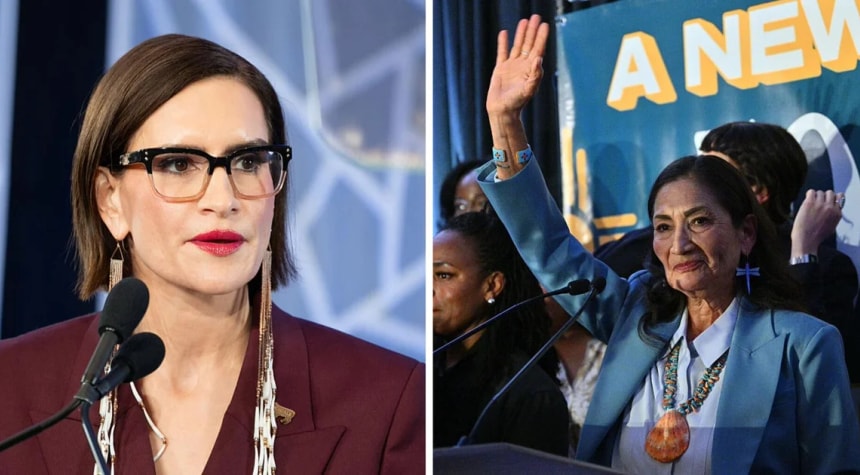
Two Native American women achieved significant electoral milestones Tuesday evening, capturing a United States Senate seat and a state governorship in races that mark unprecedented representation for Native women in American political leadership.
In New Mexico, former Interior Secretary Deb Haaland won the gubernatorial race, becoming the first Native American woman elected to lead any United States state. Meanwhile, in Minnesota, Lieutenant Governor Peggy Flanagan secured a Senate seat, marking another first for Native American women at the federal level.
Haaland, a citizen of Laguna Pueblo, defeated Republican challenger Gregg Hull, the former mayor of Rio Rancho. Her political career has been marked by a series of historic achievements. In 2015, she became the first Native American woman to chair a state political party when she assumed leadership of the Democratic Party of New Mexico. Three years later, she entered Congress as one of the first two Native American women elected to that body, serving alongside Representative Sharice Davids of Kansas. Most recently, she held the position of Interior Secretary under President Biden from 2021 until January of this year.
Flanagan, an enrolled member of White Earth Nation, prevailed over Republican Michele Tafoya, a former sports broadcaster who entered politics as a conservative commentator. Her political trajectory began in grassroots organizing before she joined the Minneapolis School Board and led the Children’s Defense Fund Minnesota. After winning election to the Minnesota House of Representatives in 2015, she has served as lieutenant governor since 2019, where she has worked to reshape Minnesota’s governmental relationship with the state’s eleven tribal nations.
Both candidates emphasized economic concerns and personal experiences in their campaigns. Haaland spoke candidly about raising her daughter as a single mother, supporting her family through selling homemade salsa, and relying on food assistance programs. Her platform centered on addressing the cost of living, protecting New Mexico’s Universal Child Care program, and reforming the state’s child welfare system. She also pledged to issue an executive order on her first day in office to halt construction of new large-scale data centers until the state Legislature establishes appropriate regulations.
Flanagan similarly drew upon her upbringing by a single mother in subsidized housing and her childhood battles with asthma that required frequent hospitalizations. She campaigned as a progressive, advocating for universal healthcare and national paid family and medical leave programs. At her election watch party in St. Paul, where White Earth leaders performed a victory song, Flanagan declared to supporters that Minnesota had rejected the Trump agenda once again.
The National Congress of American Indians, the oldest and largest association of tribal governments in the nation, recognized these victories as historic milestones for Native communities. Native American women constitute approximately one percent of the United States population according to Census Bureau data, yet have remained significantly underrepresented in elected office throughout American history.
Executive Director Larry Wright Jr. emphasized the symbolic importance of these victories for young Native girls across the country, stating that such representation demonstrates that their voices matter and their leadership is essential. He expressed hope that this increased representation will translate into substantive policy progress, particularly in protecting tribal lands and honoring treaty obligations between the federal government and tribal nations.
A third potential historic outcome remains undecided. In Alaska, Democrat Mary Peltola, who is Yup’ik, faces incumbent Republican Senator Dan Sullivan in a race that analysts consider too close to call. The final result may not be determined until ranked-choice tabulation concludes later this month.
These electoral outcomes represent a notable shift in the demographic composition of American political leadership and may signal changing attitudes toward representation and tribal sovereignty issues in state and federal governance.
Related: Black Market Weight Loss Drugs From China Reach American Children
