
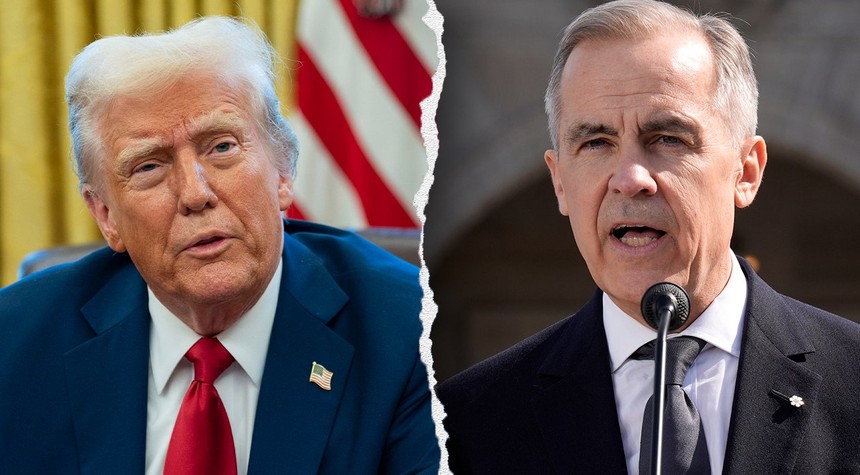
President Donald Trump has withdrawn Canada’s invitation to participate in his newly established Board of Peace, delivering the news directly to Canadian Prime Minister Mark Carney through a formal letter posted on social media Thursday.
The President’s decision comes just hours after he unveiled the international body during a speech and signing ceremony at the World Economic Forum in Davos, Switzerland. The board, which Trump has described as potentially the most prestigious assembly of world leaders ever convened, includes representatives from Latin America, Europe, the Middle East, and Central and Southeast Asia.
“Dear Prime Minister Carney: Please let this Letter serve to represent that the Board of Peace is withdrawing its invitation to you regarding Canada’s joining, what will be, the most prestigious Board of Leaders ever assembled, at any time,” the President wrote in his statement.
The formation of the Board of Peace represents a significant shift in American foreign policy architecture. Senator Tom Cotton of Arkansas, speaking with reporters, outlined the strategic rationale behind the initiative, emphasizing its potential role in countering geopolitical threats from Russia and China. The Arkansas Republican suggested that the new framework would strengthen American defensive capabilities and international partnerships in ways that existing multilateral organizations have failed to achieve.
The President’s announcement in Davos marked a departure from traditional diplomatic forums, with Trump signaling his intention to reshape global power structures. The board’s composition notably includes nations from multiple continents, though the criteria for membership and the body’s specific functions remain to be fully detailed.
The exclusion of Canada, America’s northern neighbor and long-standing ally, raises questions about the current state of bilateral relations. The two nations share the world’s longest international border, extensive trade relationships, and membership in numerous defense and economic alliances, including NATO and the United States-Mexico-Canada Agreement.
The timing of Canada’s exclusion coincides with ongoing discussions about other significant foreign policy initiatives, including a proposed framework for acquiring Greenland. Administration officials have indicated that such territorial considerations form part of a broader strategy to enhance American strategic positioning in the Arctic region, where both Russian and Chinese interests have expanded in recent years.
The Board of Peace initiative appears designed to provide an alternative to existing international organizations, though the administration has not explicitly stated whether it intends for the new body to replace or supplement current diplomatic structures. The selection of leaders from specific regions while excluding others suggests a deliberate approach to coalition building based on shared strategic interests.
As this story develops, attention will focus on how other allied nations respond to the new framework and whether additional countries will be added or removed from participation. The administration’s willingness to rescind invitations so quickly after extending them indicates a fluid approach to international partnerships that may define American foreign policy in the months ahead.
The formation of such bodies and the rapid adjustment of their membership lists underscore the President’s stated commitment to restructuring America’s role in global affairs according to what he views as national interests.
Related: Former Olympic Snowboarder and Alleged Drug Kingpin Captured in Mexico
