
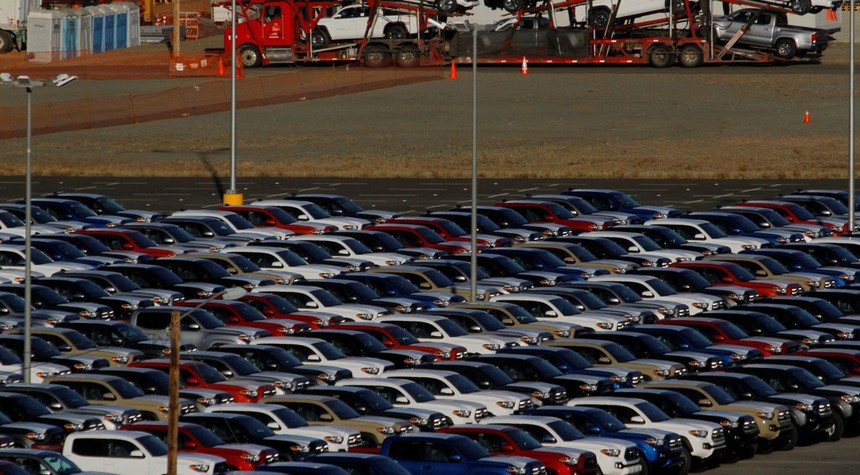
Toyota Motor Corporation announced Monday a substantial realignment of its North American manufacturing operations, committing $3.6 billion to expand its San Antonio, Texas facility and relocate most production of its popular Tacoma pickup truck from Mexico to American soil.
The Japanese automotive giant stated that the transition from its Tijuana, Mexico facility will require approximately four years to complete. The investment will establish a second assembly line at the Texas plant, generating more than 2,000 jobs and increasing the facility’s annual production capacity by 150,000 units.
The timing of this announcement carries particular significance. It follows by mere days Washington’s decision not to renew the North American trade pact with Mexico and Canada under its current terms, a development that has generated considerable uncertainty throughout the business community regarding future trade arrangements.
This latest commitment represents a portion of Toyota’s broader pledge, announced last November, to invest as much as $10 billion in American manufacturing over the next five years. As the world’s largest automaker by vehicle sales, Toyota appears to be positioning itself strategically in response to shifting trade policies and economic conditions.
“The investment is aimed at further enhancing Toyota’s locally rooted and competitive production system,” the company stated in its official announcement.
The San Antonio facility currently manufactures Tundra pickup trucks and Sequoia sport utility vehicles. The plant is also scheduled to open a rear axle assembly facility on its Texas campus this autumn. Toyota indicated it will maintain some Tacoma production at its Guanajuato, Mexico plant, though the bulk of manufacturing will relocate northward.
This production shift reflects a broader trend among major automakers responding to the Trump administration’s tariff policies on automobiles, steel, and aluminum. Global manufacturers, including American companies, have historically produced many vehicles in Mexico and other countries to capitalize on favorable trade agreements, particularly the United States-Mexico-Canada Agreement.
“Toyota remains committed to its operations throughout the United States, Canada, and Mexico, and encourages a quick resolution to USMCA to make the North American region globally competitive,” the company stated.
While the USMCA technically remains in force for another decade, Washington announced last week that the trade agreement will now face annual reviews. This modification to the agreement’s oversight structure has raised concerns among investors and business leaders about long-term planning and stability in cross-border manufacturing operations.
The San Antonio expansion represents a significant vote of confidence in American manufacturing, though it also underscores the complex calculations automakers must now make in an environment of evolving trade policy. For Toyota, which has maintained a substantial presence in North America for decades, the decision balances economic considerations with the realities of the current political and trade landscape.
The 2,000 jobs coming to Texas will provide a meaningful boost to the local economy, and the increased production capacity positions Toyota to meet American demand for its midsize pickup trucks from domestic facilities.
Related: West Virginia Man Pleads Guilty to Threatening President Trump and Federal Agents
