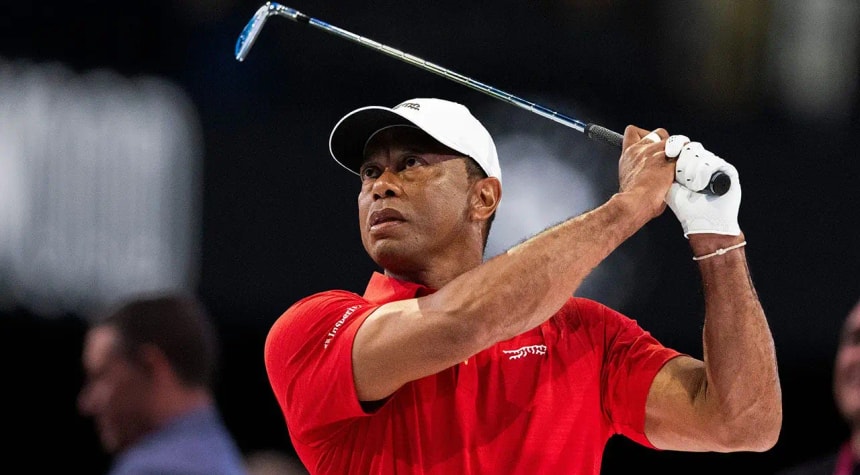
Tiger Woods may be preparing for a return to competitive golf next month, but his business ventures have encountered a significant setback in federal court. A three-judge panel of the 9th U.S. Circuit Court of Appeals in Pasadena, California, has ordered the dismissal of a trademark lawsuit filed by Woods’ apparel company, Sun Day Red, in a 2-1 decision handed down Tuesday.
The case centers on a logo dispute between Sun Day Red and Tigeraire, a small company based in Baton Rouge, Louisiana. Woods’ company had sought judicial approval to use its tiger logo after Tigeraire objected, citing similarities to its own established trademark. The appeals court reversed a lower court ruling, determining that Tigeraire had no physical presence in California, thereby removing the foundation for the lawsuit’s jurisdiction in that state.
Tigeraire was established in the summer of 2020 with a specific and modest goal in mind: creating a temperature-controlled helmet for Louisiana State University’s football team, the Tigers. The company’s logo, featuring a tiger, was registered and in use before Woods launched his new clothing line.
In October 2024, shortly after Sun Day Red made its debut in the marketplace, Tigeraire filed allegations claiming that Woods’ company had launched with a logo that was nearly identical to the mark Tigeraire had already established. The Louisiana company moved to protect what it viewed as its intellectual property rights against a significantly larger and more visible competitor.
Sun Day Red represents Woods’ first major apparel venture since ending his nearly three-decade partnership with Nike in 2024. The relationship between Woods and the athletic wear giant had been one of the most recognizable and lucrative endorsement deals in sports history, making his departure and subsequent launch of an independent brand a significant moment in both golf and sports marketing.
The trademark dispute presents an interesting David versus Goliath scenario in the world of intellectual property law. A small, regional company focused on innovative sports equipment finds itself in legal conflict with one of the most famous athletes in the world and his new business enterprise. The appeals court’s decision suggests that even high-profile defendants cannot manufacture jurisdiction where none exists, a principle that remains fundamental to federal court proceedings.
Woods, now 50 years old, is scheduled to make his first competitive appearance since 2024 at next week’s Hero World Challenge in the Bahamas. The event will mark his return to tournament play as he continues to manage the physical challenges that have limited his participation in recent years. While his prospects on the course appear promising, this legal setback indicates that building a successful apparel company involves navigating complexities that extend well beyond athletic performance and brand recognition.
The dismissal leaves unresolved questions about where and how this trademark dispute might proceed, though the ruling clearly establishes that California courts lack proper jurisdiction over the Louisiana-based defendant.
Related: American Airlines Flight Diverts After Passenger Attempts to Open Door Midair