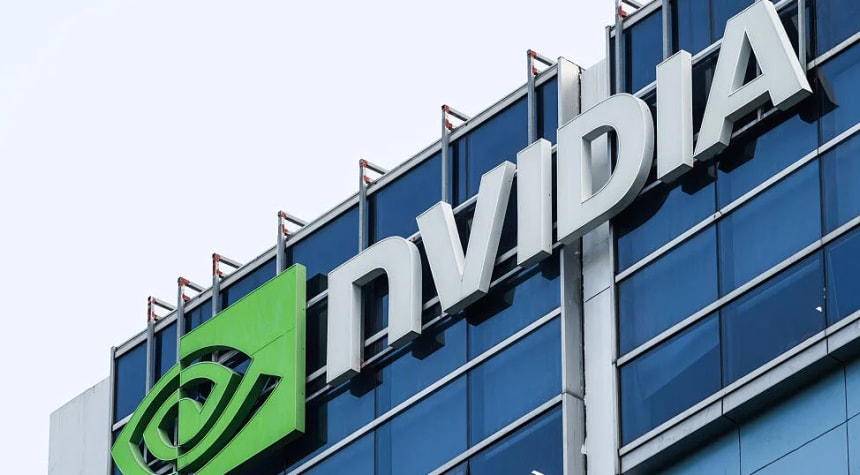
An investigation has revealed that Nvidia is selling its most advanced computer chips to American companies that are controlled by Chinese firms, raising serious questions about the effectiveness of current export controls designed to keep sensitive technology away from strategic competitors.
The findings show that at least two of Nvidia’s preferred partners are California-based companies with Chinese ownership. One such partner is owned by a Chinese firm whose chief executive graduated from a military university run by the People’s Liberation Army. Another California company changed its name after its Chinese parent corporation was placed on a federal blacklist.
Records indicate that some of these American-based but Chinese-owned firms have subsequently leased or sold the advanced artificial intelligence chips to other companies operating in Southeast Asia. The complex web of corporate relationships has made it exceedingly difficult to determine the full extent to which China may be accessing America’s most sensitive semiconductor technology.
Mishel Kondi, a senior analyst at the Center for Advanced Defense Studies, described the situation as requiring urgent attention. The Washington-based security organization examined corporate filings and company ownership data, concluding that proper enforcement resources and private sector accountability are critically needed.
The investigation is based on extensive review of corporate filings, court records, and an analysis of Nvidia’s business relationships extending back to 2023. The scrutiny has intensified following recent developments involving Nvidia’s chief executive Jensen Huang and allegations concerning a Singapore-based cloud computing company called Megaspeed, which the Justice Department is investigating for allegedly circumventing export restrictions.
Senator Elizabeth Warren, a senior member of the Senate Banking Committee, has stated that Huang, other Nvidia executives, and the company’s board owe Congress answers regarding the company’s compliance with American export controls.
The situation is complicated by the fact that Nvidia recorded nearly twenty billion dollars in sales to China last year. The company is permitted to sell certain graphics cards and lower-powered server chips to China without special licensing. However, the most technologically advanced chips, which are driving the artificial intelligence revolution, fall under strict export controls and require government approval for such sales.
Recent reporting has shown that some of Nvidia’s highest-end chips, known as Blackwells, have nevertheless reached Chinese hands through circuitous routes.
Consider the case of RiCloud AI, a data center company based in San Jose, California. The firm appears on Nvidia’s list of preferred partners in the United States, granting it preferential access to high-end computer chips used for advanced artificial intelligence applications. According to Nvidia’s public filings, these are classified as American sales because the chips go to RiCloud AI, Incorporated, a United States company.
However, RiCloud AI’s parent company is Yuxing InfoTech Investment Holdings Limited, which is headquartered in Shenzhen, China, and trades on the Hong Kong stock exchange. Yuxing’s chief executive and co-owner holds a degree in National Defense Mobilization from the People’s Liberation Army Command College. Additionally, Yuxing’s chairman previously led a data firm that Australia’s Department of Defense discontinued using over national security concerns.
The United States government has not formally accused RiCloud or Yuxing of wrongdoing. Within ten weeks of its incorporation in December, RiCloud AI had secured preferred partner status with Nvidia, gaining priority access to advanced chips, software, and technical support. Nvidia has not addressed questions about what background checks were conducted before granting this privileged status.
An examination of RiCloud AI’s business dealings reveals some unusual transactions. This year, the company signed a contract worth one hundred twenty million dollars to lease advanced Nvidia servers to a Taiwanese company previously known primarily as a whisky importer. That company, which had reported just over six hundred thousand dollars in net income, recently listed on the Nasdaq as an artificial intelligence company and has since committed to data center deals totaling hundreds of millions of dollars.
Another example involves Aivres, a California company currently listed on Nvidia’s website as an elite compute partner, the highest tier of relationship with the chip manufacturer. Aivres was previously named Inspur, the same name as its Chinese parent company. The name change came after Inspur group firms in China were added to a federal blacklist of companies considered security risks.
These revelations underscore the challenges facing American efforts to maintain technological advantages in an era of intense strategic competition. The question now facing policymakers is whether current export control mechanisms are sufficient, or whether more robust enforcement and oversight are required to prevent sensitive American technology from reaching adversaries through corporate backdoors.
Related: Jennifer Lawrence Names Chris Pratt Her Least Favorite On-Screen Kiss