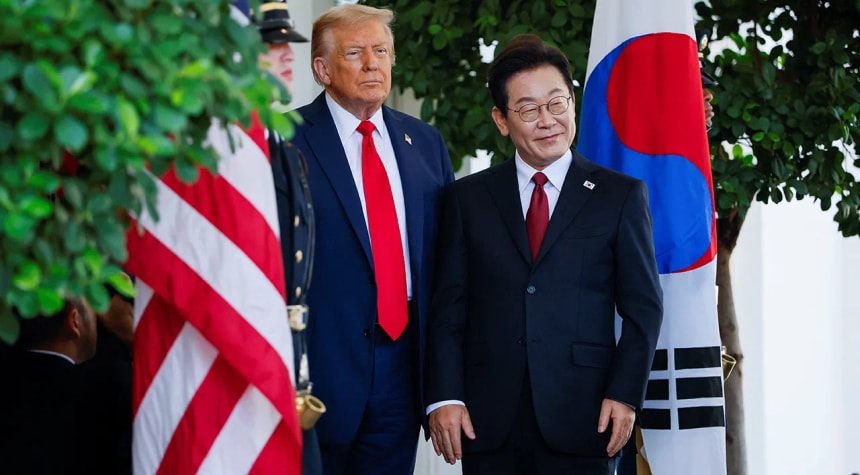
The White House has formally accused South Korea of violating commitments made to President Donald Trump regarding fair treatment of American technology companies operating within its borders. At the center of the dispute stands Coupang, an American e-commerce giant that has faced nearly $688 million in fines from South Korean regulators.
South Korean authorities recently imposed a provisional $224 million penalty against Coupang’s food delivery service, adding to a mounting total of financial sanctions against the company. White House officials stated unequivocally that the administration opposes what it characterizes as discriminatory practices by South Korean President Lee Jae Myung’s government against American business interests. The administration expects Seoul to honor its commitment to providing fair and equitable treatment for United States technology companies.
The South Korean government has rejected these allegations. An embassy spokesperson maintained that the nation abides by its agreement with the Trump administration and remains committed to maintaining a fair and nondiscriminatory business environment. The spokesperson emphasized that all investigations and decisions, including the recent fine imposed on food delivery service providers for anticompetitive conduct, were conducted lawfully and in accordance with applicable regulations. South Korean law, the spokesperson noted, fully guarantees the right to seek legal remedies.
Coupang occupies a unique position in this dispute. Despite being dubbed the "Amazon of South Korea," the company maintains no affiliation with Amazon. It is incorporated in Delaware, headquartered in Seattle, and listed on the New York Stock Exchange, making it an American company in every legal sense. Founded in 2010 by Korean American entrepreneur Bom Kim, who left Harvard Business School to pursue the venture, Coupang has become South Korea’s largest e-commerce platform, distinguished by its "Rocket Delivery" network that promises next-day or same-day delivery for most orders.
The State Department has expressed grave concern over what officials characterize as the Korea Fair Trade Commission’s continued "assault" on American companies. Officials warned that these actions threaten the broader potential of the United States-South Korea alliance. The department indicated it is actively evaluating a range of policy options to respond to what it considers discriminatory treatment.
The timing of this dispute coincides with significant political changes in South Korea. Yoon Suk Yeol, of the People Power Party, was elected president in 2022 but faced impeachment in December 2024, largely over his attempt to declare martial law. Lee Jae Myung, of the Democratic Party, who lost to Yoon in the 2022 presidential election, won the presidency in 2025. The Democratic Party now holds a strong majority in South Korea’s National Assembly, giving the party control of both the presidency and the legislature for the first time since 2022.
This political shift carries implications for the bilateral relationship. South Korea’s conservative parties have historically favored stronger ties with the United States and less engagement with North Korea. The Democratic Party, the country’s main liberal party, favors progressive domestic policies.
Coupang claims to have been the largest source of American foreign direct investment in South Korea over the past decade. The company reported driving more than $5 billion in overseas sales of American goods and services in 2025. Robert Porter, Coupang’s chief global affairs officer, stated that the company continues to seek a constructive resolution that would strengthen the alliance between the two nations and accelerate mutually beneficial trade and investment.
Representative Darrell Issa has been particularly vocal about South Korea’s alleged discrimination against American companies. The California Republican identified Biung-Ghi Ju, chair of the Korea Fair Trade Commission, as a key figure in what he characterizes as anticompetitive policies unfairly targeting American technology companies.
The congressman framed the issue in stark terms. For eight decades, he noted, America and Korea have benefited from an alliance forged through battlefield sacrifice, economic opportunity, and shared values. He expressed hope that the Lee government would choose the path of friendship rather than continued confrontation, warning that the relationship built over decades now faces risk.
That is the way matters stand as both governments navigate this delicate moment in their long alliance.
Related: Steve Austin Trades Ring Roars for Simple Thanksgiving at Home