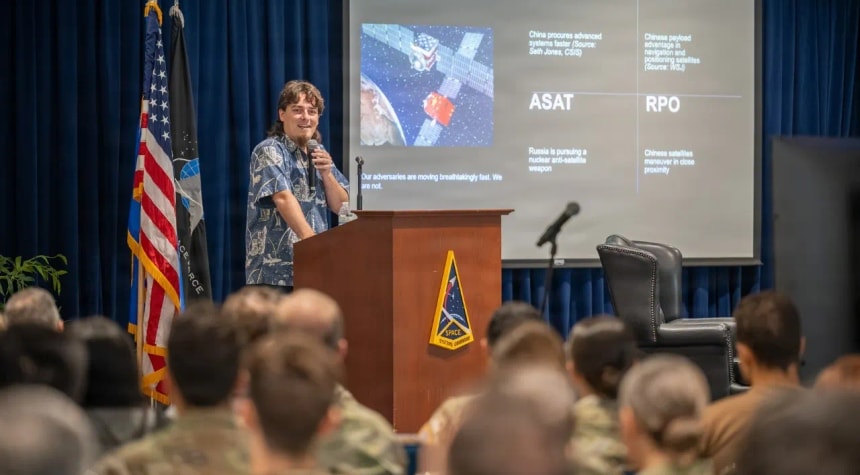
The founder of Oculus and defense technology firm Anduril Industries has revealed an ambitious and controversial plan to construct a massive floating industrial platform in the ocean, designed to allow American companies to operate beyond certain state and local regulatory restrictions.
Palmer Luckey disclosed the project, known as SLAB, in a November announcement that has raised significant questions about the future of American manufacturing, the reach of government regulation, and the feasibility of such an extraordinary engineering endeavor. According to Luckey, the platform would have a design life of one thousand years and could house facilities for metal processing, oil refining, desalination, and medical research.
The concept behind SLAB is not entirely new. Technology entrepreneurs have long discussed seasteading, the idea of building permanent structures on the ocean where people can live or conduct business outside the regulatory framework that exists on land. What distinguishes Luckey’s vision is its explicit focus on American industrial activity and its scale. The illustrations accompanying his announcement depict an enormous platform rising above the ocean with numerous buildings and industrial facilities.
Luckey began developing the project after selling Oculus to Facebook in 2014, using proceeds from that transaction to fund the venture. He and several associates reportedly valued the project at one billion dollars in 2017, though that figure represents the project’s valuation rather than confirmed expenditures. Luckey stated that considerable progress has been made, but he has not disclosed a construction timeline or specific location for the platform.
The rationale for moving American industry offshore centers on what Luckey characterizes as excessive government regulation. He has described SLAB as a relief valve for what he considers ill-considered or outdated rules and regulations that hamper industrial efficiency. The argument is straightforward. If companies can operate more efficiently without certain state and local restrictions, and if building offshore proves cheaper than constructing comparable facilities on land, then moving industrial operations to the ocean makes economic sense.
However, the legal foundation for this reasoning remains uncertain. Most coastal states maintain jurisdiction over submerged lands extending approximately three nautical miles offshore. Beyond that boundary, federal authority becomes paramount. The United States claims a territorial sea extending twelve nautical miles from its coastal baselines and maintains an exclusive economic zone reaching two hundred nautical miles offshore. The federal government retains authority over offshore structures and activities within that zone.
Moving a business beyond California’s coastal boundary would not automatically eliminate federal oversight. Environmental requirements and maritime regulations would still apply. The extent of regulatory relief would depend heavily on whether SLAB floats freely, anchors to the ocean floor, or operates under a particular nation’s registration. Luckey has not publicly explained how the platform would navigate these requirements.
The engineering challenges are equally formidable. Saltwater corrodes exposed structures. Ocean platforms must withstand hurricanes, tsunamis, and the relentless force of waves. Promising a design life of one thousand years for such a structure represents an extraordinary claim that would require unprecedented materials and construction methods.
Luckey decided to discuss SLAB publicly only after learning that journalists were preparing to describe it as a floating artificial intelligence data center. He rejected that characterization, insisting the project predates current interest in offshore data centers and encompasses far broader industrial applications. His comments suggest data centers could be part of the concept, but SLAB was conceived primarily for other industrial activities.
The proposal has also sparked concerns about more controversial uses. Luckey has suggested that offshore facilities could provide access to medical treatments currently prohibited in the United States. That possibility raises difficult questions about patient safety and whether such activities could legally occur beyond American shores.
Whether SLAB represents a practical solution to regulatory burdens or an expensive attempt to circumvent necessary protections remains to be seen. The project certainly reflects growing frustration among some industrialists with the current regulatory environment. Whether the ocean offers a viable alternative is another matter entirely.
Related: Kroger Reduces American Jobs by Thousands in Nationwide Restructuring