
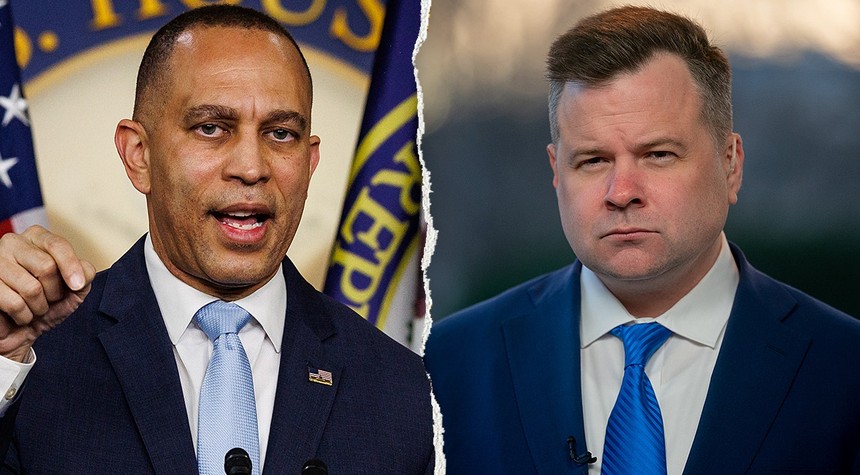
A critical United States surveillance program stands on the precipice of expiration following an unusual alliance of House Democrats and conservative Republicans who together defeated a temporary extension of the authority Thursday evening.
The measure, which would have extended Section 702 of the Foreign Intelligence Surveillance Act for three weeks, failed by a vote of 198 to 218. Under the procedural rules employed by House leadership, the legislation required a two-thirds majority for passage, a threshold it fell considerably short of achieving.
Section 702 grants American intelligence agencies the authority to conduct surveillance of foreign nationals located outside the United States without obtaining individual warrants. Intelligence officials have long maintained that this program represents one of the most valuable tools in the nation’s counterterrorism and counterintelligence arsenal.
The proposed extension was designed to provide Congress additional time to negotiate a comprehensive, long-term reauthorization of the program. However, the measure encountered formidable opposition from an unexpected coalition.
House Minority Leader Hakeem Jeffries of New York made clear that Democratic support for any extension would not be forthcoming until President Donald Trump reversed his decision to appoint Bill Pulte as acting director of national intelligence. This position represents one of the most sensitive roles in the American intelligence community, overseeing the coordination of the nation’s seventeen intelligence agencies.
House Speaker Mike Johnson of Louisiana brought the measure to the floor under a suspension of the rules, a parliamentary maneuver typically reserved for non-controversial legislation. This fast-track procedure allows for expedited consideration but carries the requirement of a two-thirds supermajority for passage, rather than the simple majority normally needed for legislation.
The failure of this extension comes at a particularly sensitive moment for American national security interests. Senate Majority Leader John Thune has been addressing the recent military strikes against Iran following the downing of an American Apache helicopter, emphasizing the administration’s determination to prevent Iranian nuclear capability.
The standoff over the intelligence chief appointment has now created a direct impact on the continuity of surveillance operations that intelligence professionals consider essential to monitoring foreign threats. Without reauthorization, Section 702 authority will lapse, potentially creating gaps in intelligence collection capabilities.
Conservative opposition to the program has centered on concerns about potential domestic surveillance overreach and civil liberties protections. These members have consistently advocated for stronger safeguards to prevent the incidental collection of American citizens’ communications.
The Democratic opposition, while sharing some of these civil liberties concerns, has now been compounded by questions regarding the qualifications and appropriateness of the President’s choice to lead the intelligence community on an acting basis.
As the expiration deadline approaches, the burden now falls upon congressional leadership to forge a path forward that can satisfy concerns on both sides of the aisle while maintaining what intelligence officials describe as critical national security capabilities. The coming days will test whether such a compromise remains achievable, or whether this vital intelligence authority will indeed lapse for the first time in its history.
Related: Weekly Jobless Claims Increase as War Concerns Loom Over Economy
