
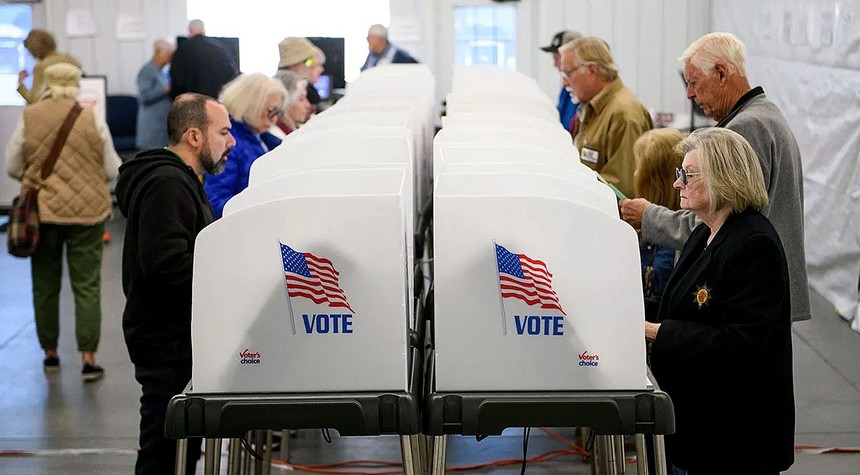
The Department of Homeland Security has announced it will withhold billions of dollars in preparedness grant funding from states that decline to implement new election security measures, including voter citizenship verification, post-election audits, and expanded use of paper ballots.
This development comes as the Trump administration intensifies its focus on election integrity, even as Senate Republicans face an uphill battle to pass the Save America Act, which would mandate proof of United States citizenship for voter registration. Despite presidential support, the legislation appears unlikely to secure the 60 votes necessary to overcome Democratic opposition.
FEMA, operating under the Department of Homeland Security’s authority, has made more than one billion dollars in taxpayer funding available through its Homeland Security Grant Program. However, states must now meet specific conditions to qualify for these funds.
The requirements are substantial. States seeking grants must submit plans to transition away from electronic voting systems that employ QR codes or barcodes in favor of hand-marked paper ballots. The agency maintains this approach provides a verifiable paper trail for assessing any alleged irregularities in vote counting.
Following each federal election, participating states must conduct manual audits of at least five percent of all ballots cast. The administration argues that such random manual reviews will confirm whether voting machine tabulations align with paper ballots and identify any potential manipulation of results.
Additionally, states must reconcile the number of voters who participated in elections with the number of ballots cast. Within 120 days of receiving any grant award, states must utilize the SAVE database to verify the citizenship status of every registered voter. The Systematic Alien Verification for Entitlements system has drawn criticism from some Democratic governors who claim it lacks adequate maintenance, though the Department of Homeland Security has disputed these assertions.
A Department of Homeland Security spokesperson indicated that threats to election systems continue to evolve and that Secretary Markwayne Mullin has designated critical infrastructure protection as a top priority. The administration considers election systems part of that critical infrastructure, remaining vulnerable to foreign attacks.
“Under President Trump’s leadership, we are taking decisive action to protect election systems from threats like foreign interference, insider threats and cyberattacks,” the spokesperson stated. “These new requirements for homeland security grant recipients will preserve election integrity and ensure that Americans can trust the results.”
The administration’s election security push extends beyond grant requirements. President Trump and Republican lawmakers have criticized states that resist federal audits of their voter rolls, while also expressing frustration with prolonged vote tabulation processes in states such as California.
These new federal requirements arrive as the Trump administration faces legal challenges to its election security initiatives. The administration recently suffered a setback in federal court regarding its broader election security agenda, though the specifics of that ruling remain under review.
The question now becomes whether states will accept these conditions to secure federal preparedness funding, or whether they will forgo billions in grants rather than comply with the administration’s election security mandates. That decision will likely shape the national conversation about federalism, election integrity, and the proper balance between state sovereignty and federal oversight in the months ahead.
Related: Palm Beach Airport Renamed for President Trump Despite Month-Long Code Transition
