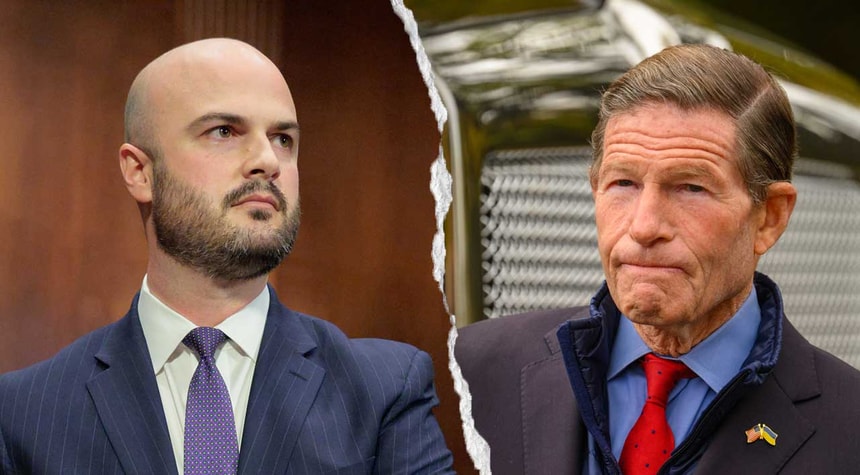
A standoff has developed between a federal prosecutor and a senior Democratic senator over what each characterizes as governmental overreach, with both officials now ordering the other to preserve documents for potential legal proceedings.
U.S. Attorney Aaron Reitz of the Southern District of Texas sent a letter to Senator Richard Blumenthal of Connecticut on Wednesday, formally ordering the lawmaker to preserve all materials related to what Reitz described as the senator’s attempts to intimidate private citizens exercising their constitutional rights. The letter specifically referenced Blumenthal’s recent inquiries into individuals and corporations that pledged donations toward President Donald Trump’s planned White House ballroom construction project.
In his letter, Reitz accused Blumenthal of threatening citizens for their association with the President and other public officials. The prosecutor cited federal statutes prohibiting the deprivation of constitutional rights, arguing that elected officials have no authority to terrorize Americans for engaging in lawful philanthropic activities. Reitz characterized Blumenthal’s actions as an extraordinary attempt to suppress the constitutional right of free association.
The U.S. Attorney demanded preservation of all documents, communications, and electronically stored information relevant to what he termed efforts to suppress associational activities for philanthropic projects in the nation’s capital. This formal preservation notice carries the weight of potential criminal investigation under federal civil rights statutes.
Senator Blumenthal, who serves as ranking member on the Senate Committee on Homeland Security and Governmental Affairs Permanent Subcommittee on Investigations, responded swiftly with his own letter, also dated November 11. The senator dismissed Reitz’s investigation threat as baseless and characterized it as the latest unlawful action by the Trump Administration designed to intimidate members of Congress from performing their constitutional duties.
Blumenthal, who will assume the chairmanship of the Permanent Subcommittee on Investigations, declared he would not be deterred from investigating what he described as the Administration’s misuse of taxpayer dollars and corporate enablement of corruption. The senator argued that the American people deserve transparency regarding the circumstances under which dozens of companies were persuaded to donate millions of dollars to what he termed presidential vanity projects.
The Connecticut lawmaker raised pointed questions about whether lawsuits were dismissed, government contracts were awarded, or regulatory enforcement was suspended in exchange for corporate donations. Such inquiries, Blumenthal maintained, constitute appropriate congressional oversight and fall squarely within the constitutional duties of legislators gathering information for potential legislative action.
In a direct counter to Reitz’s preservation order, Senator Blumenthal concluded his letter by ordering the U.S. Attorney to retain all materials related to the decision to issue the original letter targeting the senator.
The exchange represents an escalation in tensions between congressional Democrats and the Trump Administration over the boundaries of legislative oversight authority. At its core lies a fundamental disagreement about whether congressional inquiries into private donations for presidential projects constitute legitimate oversight or impermissible intimidation of citizens exercising their First Amendment rights.
The White House has not yet commented on the dispute between the federal prosecutor and the senior senator. This confrontation will likely intensify as Democrats prepare to assume greater oversight authority in congressional committees. Both parties have now gone on record preserving their options for potential legal action, suggesting this matter may ultimately require judicial resolution to determine the proper boundaries between executive authority and congressional oversight powers.
Related: TSA Officers Uncover Cocaine Concealed in Coffee at Anchorage Airport