
A federal judge has declined to reconsider her authority to investigate potential prosecutorial misconduct, rejecting Justice Department arguments that would have halted her inquiry into the handling of criminal charges against six anti-ICE protesters.
U.S. District Judge April Perry, appointed by President Biden, canceled a November 17 hearing that the Justice Department had requested to challenge her investigation. In a written order issued Wednesday, Judge Perry dismissed the government’s concerns as immaterial to her inherent judicial authority to examine whether attorneys have misled the court.
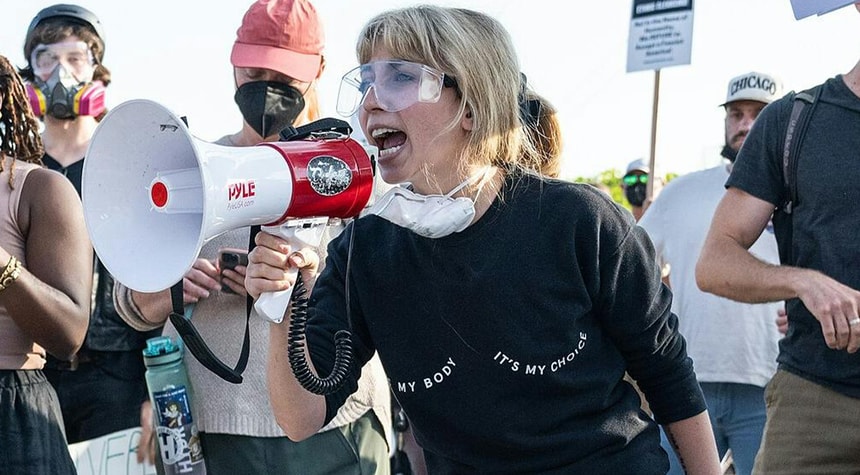
The investigation centers on the prosecution of six individuals charged in connection with a September 2025 confrontation outside an Immigration and Customs Enforcement facility in Broadview, Illinois. The Justice Department dropped the criminal case in May following allegations of prosecutorial misconduct involving former federal prosecutor Sheri Mecklenburg, who subsequently resigned from her position.
However, Judge Perry has continued to examine the conduct of prosecutors involved in the case. She has ordered four federal prosecutors to testify under oath on Monday, including U.S. Attorney Andrew Boutros and three assistant U.S. attorneys from the Northern District of Illinois: William Hogan, Matthew Skiba, and Andres Almendarez.
Associate Attorney General Stanley Woodward, the Justice Department’s third-ranking official, had argued that compelling prosecutors to testify would place them in an untenable position. In his filing, Woodward contended that prosecutors would face prosecution if they testified or risk antagonizing the court if they invoked Fifth Amendment protections against self-incrimination.
Judge Perry rejected this argument, noting that the Justice Department does not represent at least three of the four individuals ordered to testify, two of whom have expressed willingness to appear voluntarily.
The testimony will address several critical issues: prosecutors’ knowledge of possible grand jury misconduct, the accuracy of statements made to the court, the reasons for redactions in grand jury transcripts, and whether officials outside the U.S. Attorney’s Office received information about the investigation. Judge Perry may use this testimony to determine whether sanctions or criminal contempt proceedings are warranted.
The inquiry has revealed a complex procedural history involving the grand jury proceedings. On October 9, 2025, a grand jury initially declined to return an indictment against the protesters. U.S. Attorney Boutros subsequently convened another session during which two jurors were excused over concerns about their impartiality. Those same jurors later returned for a third session on October 23, when the grand jury indicted the protesters on a felony conspiracy charge.
According to court records, grand jury transcripts initially provided to Judge Perry in April contained redactions that concealed evidence of possible misconduct. The concealed material allegedly included improper vouching for the government’s case by former Assistant U.S. Attorney Mecklenburg during the October 9 grand jury presentation.
The investigation has also revealed disputes over privileged communications. On Monday, Woodward argued that certain communications involving federal prosecutors should remain confidential. Judge Perry rejected the Justice Department’s submission on Tuesday, finding it noncompliant because the government had redacted information identifying senders and recipients in email chains.
The judge also raised questions about an email sent to U.S. Attorney Boutros containing an expedited transcript of the October 9 grand jury session. Judge Perry noted that the document lacked metadata that could establish whether Boutros had actually read the email. Prosecutors were given until Thursday to address these concerns.
In October, Judge Perry requested communications between federal prosecutors and outside officials concerning investigative and charging decisions, finding that several aspects of the prosecution were seriously flawed.
The original charges stemmed from allegations that the six protesters surrounded a federal immigration agent’s vehicle outside the Broadview ICE facility to prevent him from entering. Members of the crowd allegedly struck the vehicle, damaging a side mirror and windshield wiper, though prosecutors did not identify any of the six defendants as personally responsible for the damage.
Among those charged was Kat Abughazaleh, a former Democratic congressional candidate. All charges were subsequently dropped amid the misconduct allegations.
Related: SS United States Completes Final Voyage 180 Feet Beneath Gulf Surface