
On the morning of September 11, 2001, Secret Service Director Brian Stafford confronted a crisis unlike any his agency had faced in its history. From the Crisis Center at Secret Service headquarters in Washington, D.C., Stafford watched events unfold that would test the nation’s emergency protocols in ways previously unimaginable.
With President George W. Bush in Florida and multiple government officials scattered across the nation, Stafford bore the weight of an extraordinary responsibility. For the first time in American history, he would need to fully activate the federal Continuity of Operations Plan, established under Presidential Decision Directive 67. This framework, designed to relocate the nation’s leadership to safety during catastrophic events, had been developed and rehearsed but never executed at this scale. Not even during World War II had the full continuity posture been activated in this manner.
The attacks presented immediate challenges across multiple locations. In New York City, Special Agents Tom Armas and John Buckley were attending the annual United Nations General Assembly briefing at the New York Field Office in 7 World Trade Center when the crisis began. The two agents rushed into the North Tower to assist with evacuation efforts. As they climbed toward the 40th floor, the shockwave from the South Tower being struck threw them to the ground.
Fighting their way back down through chaos and confusion, Armas and Buckley became trapped in the lobby as the South Tower collapsed, blowing out windows and filling the space with debris. When the rumbling subsided, Armas, dressed in gym shorts and a T-shirt with his equipment clipped to his belt, and Buckley led a group of civilians and New York Fire Department members to safety. Briefly separated in the smoke and debris on the street, the two agents reunited minutes later and continued moving people away from danger.
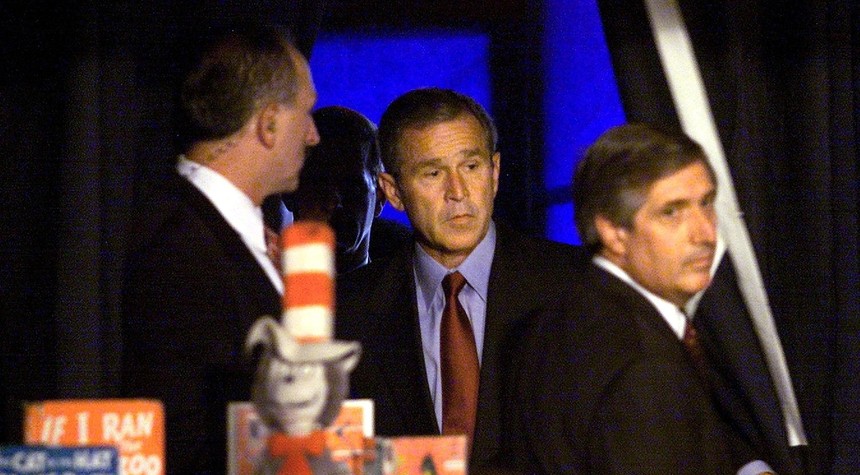
In Florida, Deputy Special Agent in Charge Edward Marinzel served as President Bush’s detail leader for the visit. When White House Chief of Staff Andy Card informed him that America was under attack, Marinzel shifted immediately into emergency protocol. Working closely with Card, the White House military aide, and Air Force One advance teams, Marinzel coordinated the president’s departure from what had become a potentially vulnerable location.
The president initially demanded to return directly to Washington, D.C., but Marinzel and his team convinced him to land first at Barksdale Air Force Base in Louisiana, which offered superior communications capabilities. To maintain the president’s security, Air Force One subsequently continued to Offutt Air Force Base in Nebraska, headquarters of United States Strategic Command. By fortunate coincidence, Offutt had a nuclear war drill scheduled that day, making it perhaps the most secure location in the nation at that moment.
Only after receiving confirmation that civilian airspace had been cleared and combat air patrols had secured the nation’s capital did Marinzel consent to the president’s return to Washington.
The events of that day demonstrated both the strength of America’s emergency response systems and the dedication of the men and women tasked with protecting the nation’s leadership. The protocols developed during the Cold War, never before tested in real crisis, functioned as designed when the nation needed them most.
Related: Bipartisan Monument Bill Honors Hershel Woody Williams and Medal of Honor Recipients
