
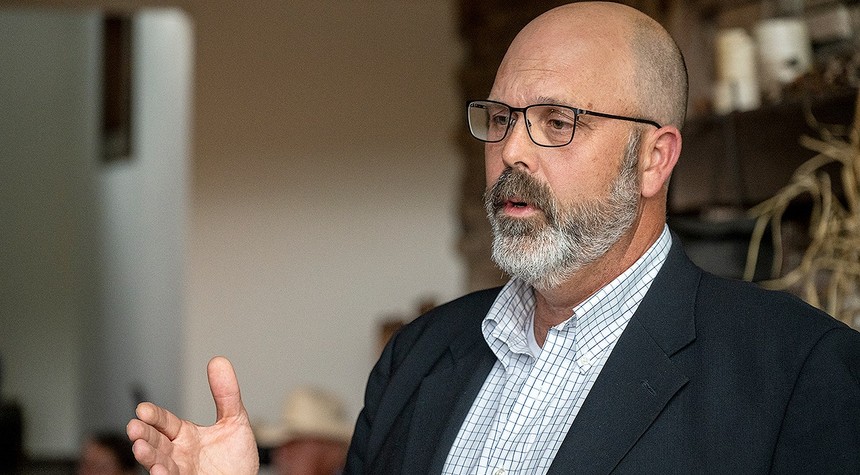
Questions have emerged regarding the authenticity of a campaign advertisement for Ryan Busse, the Democratic candidate seeking Montana’s congressional seat, after evidence suggests the residence featured in the spot may not belong to the candidate himself.
The advertisement, which carries the title “Let’s Fix It,” depicts Busse and his wife in what appears to be a modest kitchen setting, reacting to news headlines while the candidate prepares coffee. The scene shows Busse expressing frustration with current events before tossing a dishtowel onto the counter and asking his wife, “How much more of this are we supposed to take?” The commercial proceeds to show Busse loading campaign signs into a vehicle while discussing his motivations for seeking office.
An examination of public property records, real estate photographs, and previous interviews conducted at Busse’s actual residence in Kalispell, Montana, indicates the home featured in the advertisement may belong to Alice Collins, identified as a member of Busse’s campaign staff. The candidate’s actual property is described as a four-acre rural estate valued at approximately $1.6 million, bearing little resemblance to the townhome shown in the campaign material.
When pressed for clarification, Collins responded to inquiries by stating, “At no point in the ad do we claim it to be Ryan’s house.” However, both Collins and the Busse campaign declined to confirm or deny whether the townhome in question belongs to the staffer. Multiple follow-up requests for clarification went unanswered.
The matter raises questions about transparency in political advertising and the image candidates choose to present to voters. Campaign advertisements frequently serve as voters’ primary introduction to candidates, making the authenticity of such presentations a matter of public interest.
Montana voters have historically valued straightforward communication from their elected representatives. The state’s political culture emphasizes connection to the land and genuine representation of rural values. Whether this advertising choice will resonate with or alienate the electorate remains to be seen.
The Busse campaign has not issued any additional statements regarding the filming location or addressed whether future advertisements will feature the candidate’s actual residence. As the race for Montana’s House seat continues, voters will determine whether such details influence their assessment of the candidate’s character and fitness for office.
This development adds another dimension to what has already proven to be a closely watched congressional race in a state where authenticity and connection to Montana’s distinctive lifestyle often play significant roles in electoral outcomes.
Related: Professor Loses Leadership Position After Comparing Zionism to Cancer
