
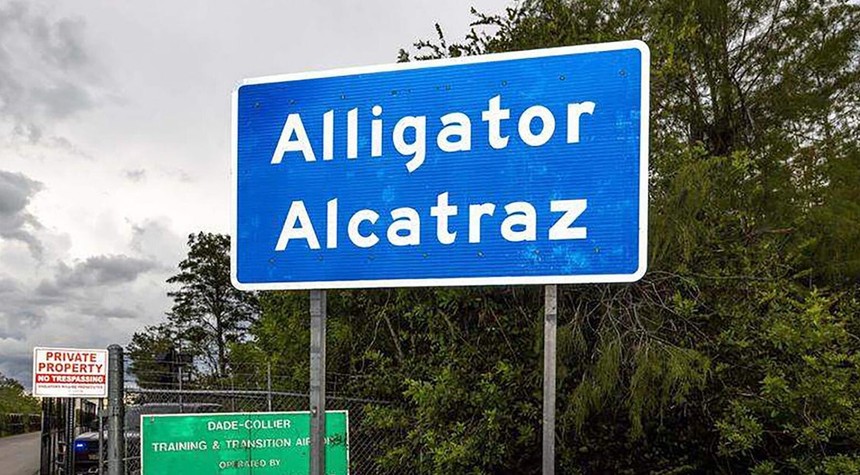
Florida has begun the process of closing its Alligator Alcatraz detention center, with state officials notifying contractors Tuesday afternoon that the facility will cease operations in the coming weeks. The approximately 1,400 detainees currently housed at the Everglades site will be transferred to other facilities or deported by June, according to four sources familiar with the announcement.
The closure marks the end of what was initially conceived as a temporary solution to support federal immigration enforcement efforts. However, the facility’s operating costs have spiraled to nearly $1 billion, a figure that appears to have driven the decision to shutter the operation.
Governor Ron DeSantis had signaled last week that the facility would likely close soon, stating at a news conference that if operations ceased immediately, the state could declare the mission accomplished. Tuesday’s notification to vendors represents the first formal acknowledgment of the closure timeline and the speed with which the state intends to wind down operations.
Kevin Guthrie, director of the Florida Department of Emergency Management, which oversees the facility, did not respond to requests for comment. However, department spokesperson Stephanie Hartman issued a statement Tuesday evening emphasizing the temporary nature of the detention center from its inception.
“As Governor DeSantis stated last week, the South Florida detention facility was always intended to serve as a temporary facility to support ongoing illegal immigration enforcement and detention operations,” Hartman said. She added that should federal operational needs change and the Department of Homeland Security implement alternative plans, the state would adjust accordingly.
The facility, which opened on July 3 in the remote reaches of the Everglades, was once praised by President Trump as a model for other states to follow. The detention center was conceived and championed by DeSantis as part of Florida’s efforts to address illegal immigration concerns.
Once the remaining detainees are removed from the facility, state officials have outlined a demobilization process that will involve dismantling the temporary infrastructure erected at the site. This includes removing fencing, trailers, and other structures built to accommodate the detention operations. Officials estimate this demobilization phase will require an additional two to three weeks to complete.
After the site is cleared, it will return to its original purpose as a small airport used for pilot training, bringing an end to one of the more controversial chapters in Florida’s immigration enforcement efforts.
The escalating costs associated with operating the facility appear to have been the primary factor in the decision to close. What began as a state initiative to support federal immigration enforcement has become a financial burden that state officials have determined is no longer sustainable.
The closure raises questions about the future of state-level immigration detention efforts and whether other states that considered similar facilities will proceed with their plans. It also underscores the complex financial realities of managing large-scale detention operations, even when political will supports such endeavors.
Related: World Cup Tourism Prompts Kansas City to Weigh Automatic Tipping Policy
