
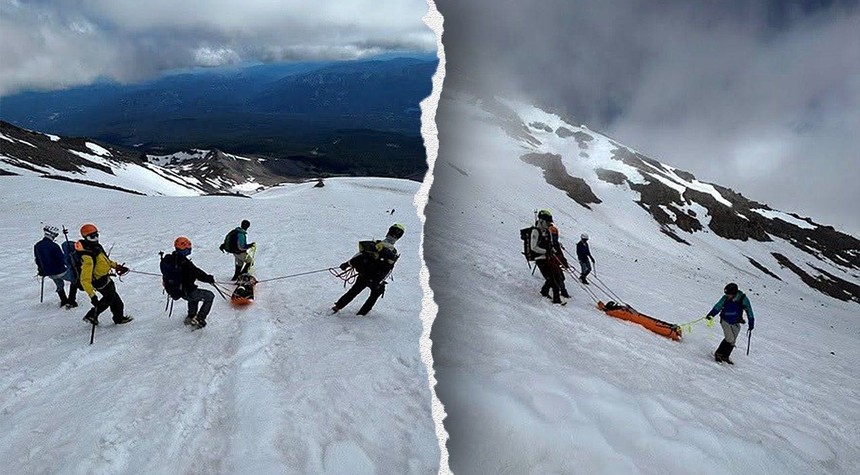
A 31-year-old novice climber survived a harrowing 1,500-foot slide down California’s Mount Shasta on Sunday, prompting a complex rescue operation that stretched more than five hours as deteriorating weather conditions forced rescuers to adapt their strategy.
The woman was ascending the Left of Heart variation of the popular Avalanche Gulch route with two other inexperienced climbers when she lost her footing near the 13,000-foot elevation mark. According to the U.S. Forest Service, she slid approximately 1,500 vertical feet down the mountain’s steep snow slopes before coming to rest.
What followed was a race against both time and the elements. Cloud cover prevented a California Highway Patrol helicopter from reaching the injured climber directly, necessitating a staged rescue operation that would test the coordination between air and ground teams.
“The weather complicated the issue,” a California Highway Patrol Office of Air Operations official with the Redding Air Unit confirmed. Unable to execute a direct extraction, the helicopter crew modified their approach, dropping U.S. Forest Service climbing rangers at a lower elevation on the mountain. These rangers then hiked to reach the patient while the air crew monitored conditions, waiting for an opportunity to complete the evacuation.
Forest Service officials clarified that while the distance sounds extraordinary, the incident was not a vertical free fall. The climber’s descent was a long slide down steep snow slopes, with the terrain gradually becoming less severe as she descended.
“It starts steep and then kind of levels out a little bit,” a Shasta-Trinity National Forest official explained. “It does enough for them to stop.”
Once rangers reached the woman and stabilized her condition, they carefully transported her by rescue litter to Lake Helen, a location where weather conditions finally permitted a helicopter landing. At approximately 5:37 p.m., a CHP helicopter successfully evacuated her to Mercy Medical Center Mount Shasta. The entire operation, from initial emergency call to hospital transport, required roughly five and a half hours.
The incident underscores the challenges facing novice climbers on California’s demanding peaks. Officials noted that climbers receive instruction in self-arrest techniques using an ice axe after slipping on snow and ice. However, inexperienced climbers frequently struggle to execute this critical maneuver before gaining dangerous momentum on steep slopes.
The woman sustained a suspected fractured ankle along with additional injuries. Despite her ordeal, she remained alert and in good spirits when rescuers reached her position, a testament to both her fortitude and the swift response of rescue personnel.
This rescue operation demonstrates the ongoing risks associated with mountaineering, even on well-traveled routes, and the vital importance of experience and preparation when attempting high-altitude climbs. It also highlights the professionalism and adaptability of rescue teams who must often work under challenging conditions to bring injured climbers to safety.
The two other climbers in the party were not injured in the incident.
Related: Emergency Dispatch Records Reveal Cardiac Arrest Call at McConnell Residence in June
