
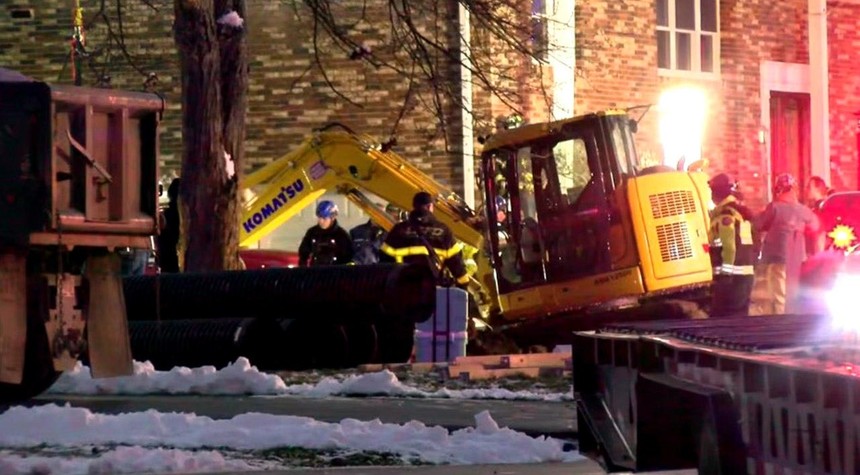
A construction worker lost his life and two others sustained severe injuries when an unprotected trench collapsed at a work site near Milford, Ohio, despite warnings from the crew about dangerous conditions.
Jose Alberto Barajas Martinez, 28, died in the December 5th incident after workers reportedly voiced concerns about the depth of the trench but were instructed to proceed with their work nonetheless. Federal investigators have since determined that the collapse occurred in a trench approximately eight feet deep that lacked any protective measures against cave-ins.
The Occupational Safety and Health Administration conducted an investigation following the tragedy and found that Whispering Creek LLC, the landscaping company overseeing the project, had violated federal workplace safety regulations. Current federal standards mandate protective safeguards for any trench exceeding five feet in depth. The workers were installing storm drain piping when the walls of the excavation gave way.
OSHA cited the company for five separate safety violations and initially assessed penalties totaling $231,714. However, that fine has since been reduced to $49,000. The reduction comes as prosecutors in Clermont County weigh whether to pursue criminal charges in connection with the incident.
The case raises serious questions about workplace safety enforcement and the protection of construction workers performing hazardous tasks. Trench collapses remain among the most deadly hazards in construction work, with the weight of collapsing soil capable of crushing or suffocating workers within seconds. Industry safety experts have long emphasized that proper shoring, shielding, or sloping of trenches represents a fundamental and non-negotiable safety requirement.
The substantial reduction in the initial fine, from more than $230,000 to $49,000, has not been explained in detail by federal officials. Such reductions sometimes occur through negotiated settlements, though the rationale for accepting a penalty representing roughly one-fifth of the original assessment remains unclear, particularly given the fatal outcome.
The two surviving workers suffered serious injuries in the collapse, though specific details regarding their conditions have not been made public. The incident serves as a stark reminder of the consequences when safety protocols are not followed and when worker concerns about dangerous conditions go unheeded.
As Clermont County prosecutors continue their review of potential criminal liability, the case underscores the ongoing challenge of ensuring that workplace safety regulations are not merely suggestions but requirements that can mean the difference between life and death. The investigation continues, and the community awaits word on whether those responsible for the unsafe conditions will face accountability beyond civil penalties.
Related: Human Remains Discovered at Lake Mead as Water Levels Reach Historic Lows
