
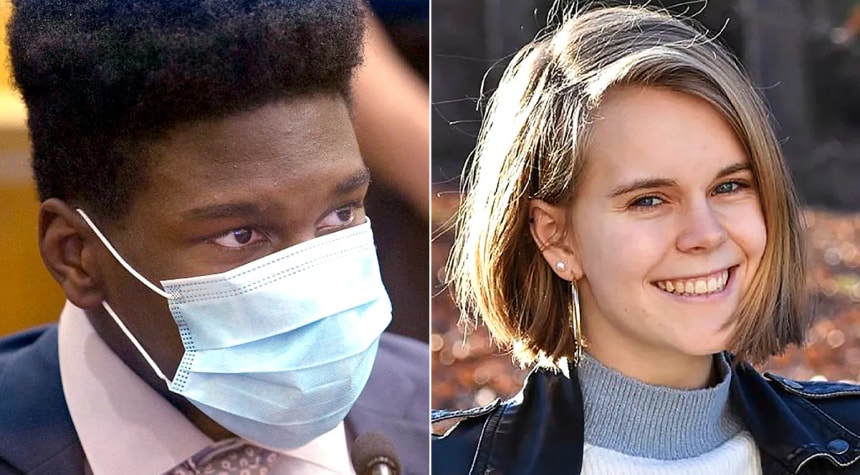
Luchiano Lewis, now 21 years old, walked free from Franklin Correctional Facility on October 14th, released under conditional parole supervision after serving fewer than seven years for his role in the 2019 murder of Barnard College freshman Tessa Majors. The New York State Department of Corrections and Community Supervision confirmed the release, which has renewed scrutiny of the state’s sentencing and parole policies.
Lewis was one of three teenagers convicted in connection with the brutal attack that took the life of 18-year-old Majors in Manhattan’s Morningside Park on December 11, 2019. He had pleaded guilty in 2021 to second-degree murder and first-degree robbery, receiving a sentence of nine years to life in prison.
Under New York State law, Lewis qualified for conditional release without appearing before the State Board of Parole. The statute allows eligible inmates to be released after serving two-thirds of their minimum sentence, provided they meet applicable requirements and maintain good conduct while incarcerated. This automatic provision meant Lewis could leave prison after approximately six years and eight months of his nine-year minimum term.
The circumstances of Majors’ death shocked New York City and the nation. Prosecutors established that a group of teenagers confronted the young woman near a staircase in Morningside Park during an attempted robbery. During the attack, Majors was stabbed multiple times. Despite her grievous injuries, she managed to climb a flight of stairs and reach street level before collapsing. Emergency responders transported her to a nearby hospital, where she succumbed to her wounds.
Lewis, who was 14 at the time of the crime, was tried as an adult alongside another 14-year-old defendant. According to prosecutors, Lewis restrained Majors in a headlock while his accomplice repeatedly stabbed her. Though Lewis did not wield the knife himself, prosecutors argued successfully that he played an essential role in the robbery that resulted in Majors’ death.
At sentencing, Manhattan Supreme Court Justice Robert Mandelbaum acknowledged the complexity of punishing a juvenile offender while delivering justice for a senseless killing. The judge noted that the crime "tore at the fabric of the entire city." He recognized Lewis’s youth, stating, "The defendant was and is extremely young. He has his whole life ahead of him, but Tessa Majors does not."
The two other teenagers convicted in connection with the killing remain incarcerated. Rashaun Weaver, who was 14 at the time and identified as the individual who stabbed Majors, received a sentence of 14 years to life in prison for murder and robbery. Zyairr Davis, who was 13 when the crime occurred, pleaded guilty to robbery and received an 18-month sentence in juvenile detention. While Davis completed that sentence, he is currently being held on charges related to an unrelated attempted murder case.
Lewis now remains under community supervision as part of his conditional release. The terms of his parole will dictate his movements and activities as he re-enters society, having served his time for a crime that claimed a promising young life and left an indelible mark on New York City.
Related: Giants Defeat Jaguars After Controversial Replay Decision Nullifies Touchdown