
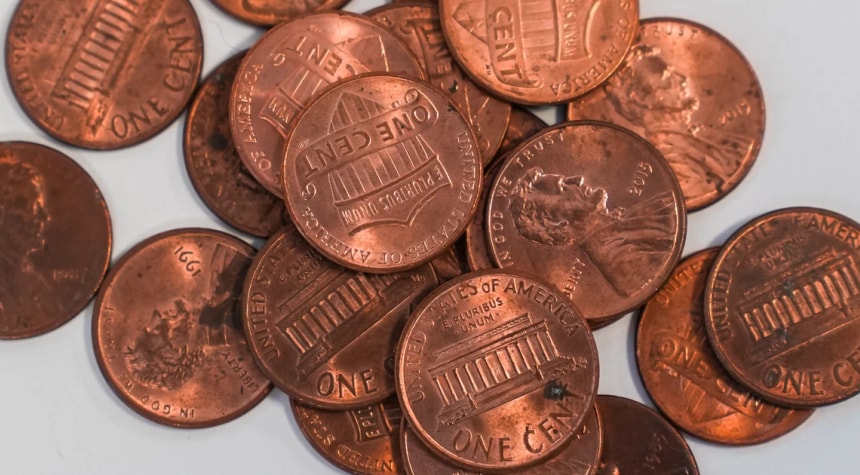
The United States government has formally ended production of the penny after more than two centuries, as President Donald Trump signed the bipartisan Common Cents Act into law on Friday. The legislation passed both chambers of Congress by voice vote, indicating no significant opposition from either party.
The decision comes down to simple mathematics and fiscal responsibility. The federal government has been spending nearly four cents to produce each one-cent coin, a loss that Representative Lisa McClain of Michigan, the bill’s author, described as unsustainable. The legislation is projected to save American taxpayers approximately eighty-five million dollars annually by permanently ending penny production.
The U.S. Mint had already ceased regular penny production in November 2025, following President Trump’s directive to the Treasury Department nine months earlier. At that time, the president characterized the process as wasteful, and the Mint’s own analysis supported this assessment, calculating immediate annual savings of fifty-six million dollars.
While regular production has ceased, the U.S. Mint will continue to produce limited quantities of collector versions for numismatists and history enthusiasts. The existing supply of approximately one hundred fourteen billion pennies currently in circulation will remain legal tender for all debts, public charges, taxes, and dues. The Federal Reserve has committed to recirculating these coins for as long as possible.
The new law includes practical provisions for the transition. Retail establishments and businesses that accept cash payments may now round their prices to the nearest five-cent increment. This adjustment acknowledges the reality that the nickel will now serve as the smallest unit of currency in everyday commerce.
In an additional cost-saving measure, the legislation authorizes changes to nickel production. The five-cent piece will now be manufactured with an inner layer of zinc and an outer layer of nickel, replacing the current more expensive composition of nickel and copper.
The penny’s history stretches back to the earliest days of the republic. Congress passed the Coinage Act in 1792, and the U.S. Mint began producing the cent the following year. The coin has undergone numerous redesigns throughout its nearly two hundred fifty years of production. Benjamin Franklin designed the first penny in 1787, featuring a sundial motif. Early Mint versions depicted Liberty and featured chain links representing the states.
The modern penny, recognizable to all Americans, did not appear until 1909 when President Abraham Lincoln’s profile was added to commemorate the centennial of his birth. The most recent design change came in 2010, when the reverse side received a Union Shield design symbolizing Lincoln’s preservation of the United States as a unified nation.
This marks the end of an era in American currency, but it represents a practical acknowledgment that economic realities must sometimes take precedence over tradition. When producing currency costs more than the currency’s value, continuation becomes indefensible policy.
Related: Experimental Fentanyl Vaccine Enters Clinical Trials as Overdose Deaths Mount