
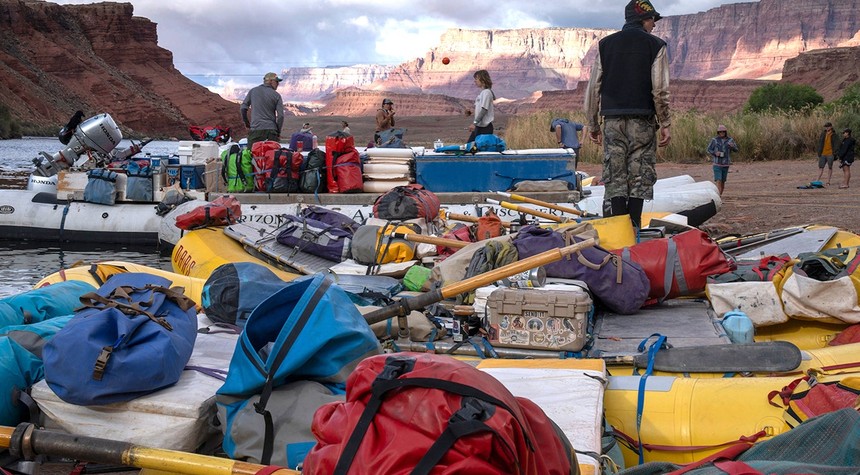
Federal health officials have launched an investigation into a series of unexplained illnesses affecting multiple groups of rafters who traveled through the Grand Canyon in recent weeks, raising concerns as the summer recreational season reaches its peak.
The National Park Service is leading the inquiry after numerous individuals who participated in separate two-week rafting expeditions along the Colorado River reported developing severe symptoms upon returning home. The cases, which began appearing among rafters whose trips commenced as early as mid-May, have left medical professionals searching for answers.
According to reports from affected individuals, the symptoms have been both varied and severe. One group of sixteen rafters who embarked on their journey in mid-June saw four members fall ill with conditions ranging from fever and chills to more serious complications including pneumonia and fluid accumulation in the lungs. In one particularly alarming case, a patient briefly lost consciousness while visiting a doctor’s office and required immediate hospitalization.
The symptoms have proven puzzling to medical professionals. One individual developed what has been described as a cellulitis-like condition on a bruised area of the shin, creating swelling severe enough to feel like a broken bone, though X-rays revealed no fracture. The condition has reportedly worsened rather than improved with time.
The uncertainty surrounding the illness’s cause has prompted some affected individuals to take extraordinary precautionary measures. At least one person has begun receiving the rabies vaccine series despite showing no specific symptoms of that disease, simply as a safeguard while authorities work to identify the source of the outbreak.
Speculation has centered on several possible causes, with mosquito-borne illnesses emerging as a leading theory. Multiple rafters reported encountering mosquitoes during evening hours while camping in the canyon. Diseases such as dengue fever and chikungunya, both transmitted by mosquitoes, have been mentioned as potential culprits, though no definitive diagnosis has been established.
Notably, rafters reported an absence of ticks during their expeditions, effectively ruling out tick-borne illnesses as a likely cause. The groups spent their nights sleeping outdoors, which would have provided ample opportunity for exposure to mosquitoes and other insects native to the canyon environment.
Another affected individual reported visiting an emergency room with a severely swollen knee and what he described as “bone-crushing” joint pain following a mid-May expedition. This individual also confirmed receiving mosquito bites during the trip.
The investigation comes at a time when federal health officials are already tracking an increase in cases of various parasitic infections across the country as warmer weather creates favorable conditions for disease transmission. The timing of these Grand Canyon cases, coinciding with the beginning of the summer travel season, has heightened concern among park officials and public health authorities.
As the investigation continues, health officials are working to determine whether these cases represent isolated incidents or indicate a broader public health concern for visitors to one of America’s most iconic natural landmarks. The Grand Canyon attracts millions of visitors annually, with river rafting representing one of the park’s most popular activities.
Related: Five-Year-Old Boy Shot While Riding Bicycle Outside Detroit Home