
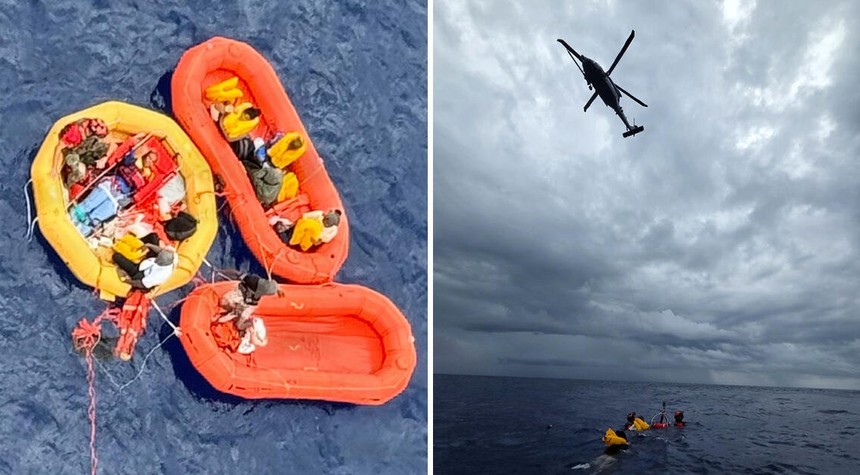
Military personnel who conducted a dramatic rescue operation off the Florida coast this week described the survival of eleven people as nothing short of miraculous after their aircraft went down in the Atlantic Ocean.
The incident unfolded Tuesday morning approximately 80 miles east of Melbourne, Florida, when an emergency locator transmitter signal alerted Coast Guard watchstanders to a potential distress situation. What followed was a coordinated rescue effort that military officials say represents both the effectiveness of emergency response systems and an extraordinary stroke of fortune for those aboard the downed aircraft.
The twin-engine turboprop airplane, carrying eleven Bahamian adults, crashed into the ocean around 11 a.m. Tuesday. By the time rescue crews located the survivors, they had been adrift in a life raft for approximately five hours, facing the twin threats of dehydration and potential injuries from the crash itself.
Major Elizabeth Piowaty, aircraft commander on an HC-130J Combat King II from Patrick Space Force Base, explained the technology that made the rescue possible. The emergency locator transmitter activates upon significant impact with land or water, sending an automated distress signal that provides rescuers with crucial information about a potential emergency.
Fortune played a role in the swift response. A 920th Rescue Wing HH-60W Jolly Green II helicopter crew was already airborne conducting a training mission when the alert came through. The crew was immediately redirected to assist in the search and rescue operation. Coast Guard and additional Air Force assets joined the effort.
Captain Rory Whipple, who participated in the rescue, described the condition of the survivors when they were located. The physical, mental, and emotional toll of the ordeal was evident. The survivors had no communication capabilities and were unaware that rescue was coming until the aircraft appeared directly overhead.
The rescue itself presented additional challenges. Major Piowaty noted that a thunderstorm was approaching as crews located the survivors, who had deployed a rain tarp over their life raft for protection from the elements. The timing proved critical.
What makes this incident particularly remarkable, according to the military personnel involved, is the simple fact of survival. Major Piowaty stated plainly that she had not previously known anyone to survive an ocean ditching. The pilot of the downed aircraft would have faced numerous hazards during the emergency landing, including sea states, wave crests, and the difficult task of maintaining the slowest safe airspeed possible under emergency conditions.
For the military rescuers, who train regularly for such scenarios, the operation represented professional execution of their duties. As Captain Whipple noted, it was another day at work for the rescue teams. For the eleven survivors pulled from the Atlantic, however, it was a day they will not soon forget.
All eleven individuals were successfully hoisted into the rescue helicopter and transported to safety. While the investigation into the cause of the aircraft’s emergency will continue, the outcome stands as a testament to both the preparedness of military rescue operations and the resilience of those who survived an ordeal that few ever do.
Related: Army Scrambles to Address Budget Crisis Amid Rising Operational Costs
