
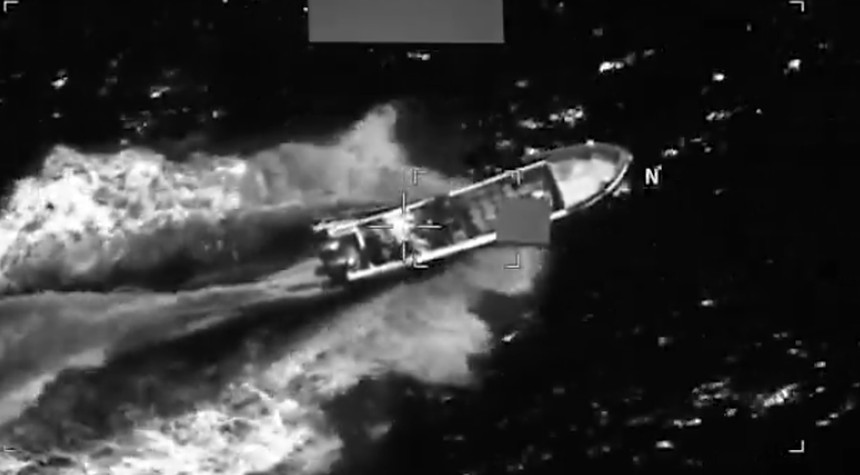
The United States military conducted its fifth boat strike in approximately one week on Wednesday, attacking a vessel in the eastern Pacific Ocean and killing two men aboard. The operation represents the latest action in an escalating campaign against alleged drug traffickers that began in early September.
According to U.S. Southern Command, at least 207 individuals have been killed in these maritime strikes since the campaign’s inception. The military has characterized the targets as “narcoterrorists” operating along known smuggling routes in the eastern Pacific Ocean and Caribbean Sea.
The Wednesday strike was carried out under the direction of General Francis L. Donovan, the commanding officer for U.S. military operations in Latin America. Video footage released on social media platforms showed a boat moving at high speed before erupting in flames. However, U.S. Southern Command did not provide evidence confirming that the targeted vessel was transporting illegal narcotics.
President Trump has framed these operations as part of an “armed conflict” with Latin American drug cartels, arguing that aggressive military action is necessary to reduce the flow of narcotics into the United States and prevent American overdose deaths. The administration maintains that these strikes represent a critical escalation in the ongoing effort to combat drug trafficking.
Nevertheless, the campaign has generated substantial controversy. The administration has provided limited evidence to substantiate its claims regarding the identities and activities of those killed in the strikes. Questions have emerged about both the legal foundation for these military operations and their practical effectiveness in combating the drug trade.
Critics point out that fentanyl, the substance responsible for a significant portion of fatal overdoses in the United States, typically enters the country through land routes from Mexico rather than by sea. The synthetic opioid is manufactured in Mexico using precursor chemicals imported from China and India, suggesting that maritime interdiction may not address the primary supply chain.
The strikes have attracted scrutiny from Democratic lawmakers and military legal scholars. The first operation in early September proved particularly controversial. Nine individuals were killed in the initial attack, while two survivors clung to the wreckage. According to sources familiar with footage shown to members of Congress, these two men were waving overhead when the vessel was struck a second time, killing them both.
General Donovan recently met with Cuban military leaders near the U.S. Navy base at Guantanamo Bay, though the specific nature of those discussions has not been disclosed.
The fundamental questions surrounding this campaign remain unresolved. The legal authority under which these strikes are conducted, the standards of evidence required to designate targets, and the strategic value of maritime interdiction in addressing fentanyl trafficking all warrant careful examination.
As this military campaign continues, the American people deserve transparency regarding its legal basis, operational effectiveness, and the evidence supporting each strike. The gravity of military action demands no less than complete accountability to the public and adherence to the rule of law.
Related: California Primary Results Remain Uncertain as Vote Counting Continues
