
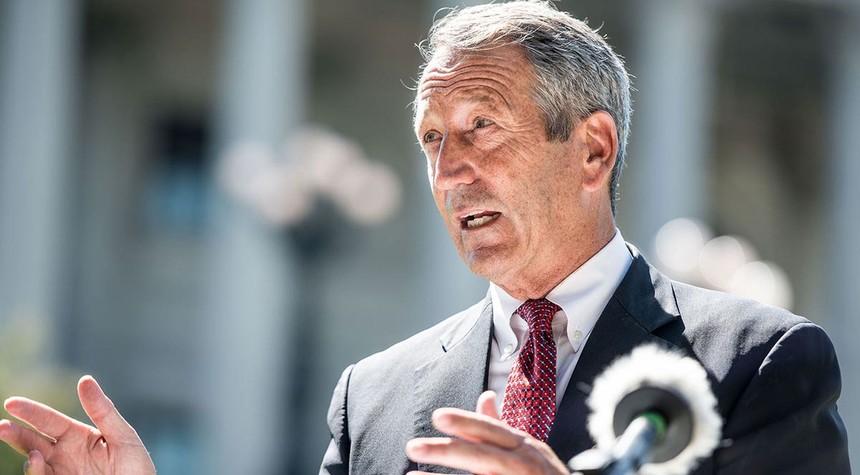
Former South Carolina Governor Mark Sanford has withdrawn from his congressional campaign just one month after announcing his candidacy, choosing instead to dedicate his efforts to addressing the nation’s mounting debt crisis through a new nonprofit organization.
Sanford, 65, who previously served both as governor and congressman from South Carolina, announced Thursday that he would be shuttering his campaign to reclaim his former House seat. The decision marks a significant shift in strategy for the Republican, who has long championed fiscal conservatism throughout his political career.
“After a lot of thought, I’ve concluded that the most effective way I can contribute right now is not by seeking office, but by helping build a broader movement focused on the country’s financial future,” Sanford stated in his announcement. “The trajectory of debt and deficits isn’t a Republican problem or a Democrat problem—it’s an American problem. And it’s one that demands sustained grassroots pressure for change to occur.”
The former governor’s decision comes at a time when the national debt has reached unprecedented levels, exceeding $36 trillion and continuing to climb. Both major political parties have contributed to the escalating fiscal burden, with deficit spending remaining a persistent feature of federal budgets regardless of which party controls Congress or the White House.
Sanford’s political career has been marked by consistent advocacy for fiscal responsibility and limited government spending. During his tenure as governor from 2003 to 2011, he frequently clashed with state legislators over budget matters and became known for his opposition to federal stimulus spending. He later served in the House of Representatives from 2013 to 2019, representing South Carolina’s 1st Congressional District.
The decision to abandon electoral politics in favor of grassroots activism represents an acknowledgment that traditional political channels may prove insufficient to address the debt crisis. Sanford’s planned nonprofit will aim to mobilize public pressure on elected officials to take meaningful action on fiscal matters, rather than relying on individual legislators to champion the cause from within government.
This approach reflects a growing recognition among fiscal conservatives that the national debt has become a bipartisan failure requiring solutions beyond conventional political maneuvering. Despite repeated warnings from economists and policy experts about the long-term consequences of sustained deficit spending, both Democratic and Republican administrations have presided over significant increases in the national debt.
The sustainability of current fiscal policy remains a matter of serious concern among economists, who warn that continued deficit spending could lead to higher interest rates, reduced economic growth, and diminished capacity to respond to future crises. As interest payments on the national debt consume an ever-larger share of the federal budget, the issue has taken on renewed urgency.
Sanford’s exit from the congressional race leaves the field open for other Republican candidates seeking to represent South Carolina’s 1st District. The seat has remained solidly Republican in recent elections, and the primary contest will likely determine the eventual winner in the general election.
Related: Fatal Hospital Stabbing Renews Debate Over California Immigration Enforcement Policies
