
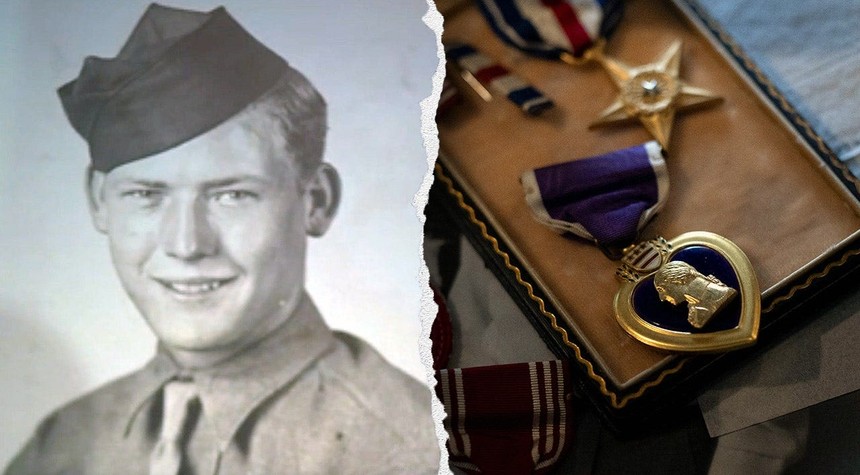
A 99-year-old Kentucky veteran who shed his blood fighting Nazi Germany during World War II has finally received the Purple Heart he earned more than eight decades ago, correcting what appears to be a long-standing administrative oversight that delayed one of our nation’s most solemn military recognitions.
Glenn Fisher, who will celebrate his 100th birthday in the coming months, received the Purple Heart during a ceremony Wednesday at Louisville’s Frazier History Museum. The decoration, awarded to American service members wounded or killed by enemy action, had eluded Fisher for 81 years due to what officials describe as a recording error in his military records.
“I have been so excited, I have not been able to sleep at night thinking about what a wonderful thing is happening,” Fisher said during the ceremony. “Sometimes I would wake up and say, ‘now, is this really true?’ And it is, it is really true.”
The Purple Heart stands as one of America’s oldest military honors, established by General George Washington in 1782 and revived in 1932 to recognize those who bear the physical cost of defending our nation. For Fisher, the award represents formal acknowledgment of sacrifices made during some of the darkest days of the 20th century, when American forces fought to liberate Europe from totalitarian tyranny.
The circumstances surrounding Fisher’s injuries during the war were not detailed in available records, though the life-threatening nature of his wounds underscores the grave dangers faced by the Greatest Generation in their fight against the Axis powers. That such injuries went unrecognized for more than eight decades raises questions about how many other veterans may have slipped through bureaucratic cracks over the years.
The delay in Fisher’s recognition highlights ongoing challenges within military record-keeping systems, particularly for service members from the World War II era. Many records from that period were lost or damaged, including a catastrophic 1973 fire at the National Personnel Records Center in St. Louis that destroyed approximately 16 to 18 million official military personnel files.
Fisher’s case was ultimately resolved, allowing him to receive this long-overdue recognition while still able to appreciate its significance. The timing, just months before his centennial birthday, adds particular poignancy to the ceremony.
The Purple Heart ceremony serves as a reminder of the debt owed to those who served during World War II. As members of the Greatest Generation pass into history at an accelerating rate, opportunities to properly honor their service grow increasingly rare. Fisher now joins the ranks of properly recognized Purple Heart recipients, his sacrifice formally recorded for posterity.
For Fisher, the award represents more than a medal. It stands as tangible proof of service rendered and blood spilled in defense of freedom during humanity’s greatest conflict. That it arrived 81 years late does not diminish its meaning, though it underscores the importance of ensuring such oversights do not continue to deny other veterans their earned recognition.
Related: Fourth of July Celebrations Turn Deadly as Gun Violence Strikes Three Cities
